A well-designed outdoor space doesn’t happen by accident. The most inviting homes treat fencing and decking as part of the same design conversation rather than separate projects completed years apart.
When planned together, these elements create a cohesive outdoor environment that feels intentional, functional, and visually balanced. The result is an outdoor space that not only looks better but works better for entertaining, relaxing, and enjoying your property.
For residential and rural homes especially, coordinating fencing and decking can transform the entire character of the backyard.
Why Fencing and Decking Should Be Planned Together
Many homeowners install a fence first and only think about a deck later. By that stage the materials, colours, and layout have already been decided, which can make it difficult to create a unified design.
Planning both elements together allows you to consider how the deck connects to the yard, where privacy is needed, how views are framed, and how colours and materials work together.
This integrated approach creates a space that feels cohesive rather than pieced together over time.
Before and After: The Difference Integrated Design Makes
When fencing and decking are designed together, the transformation can be dramatic.
Before
A small timber deck disconnected from the yard
A separate boundary fence installed years earlier
Mismatched colours and materials
Limited usable outdoor space
After
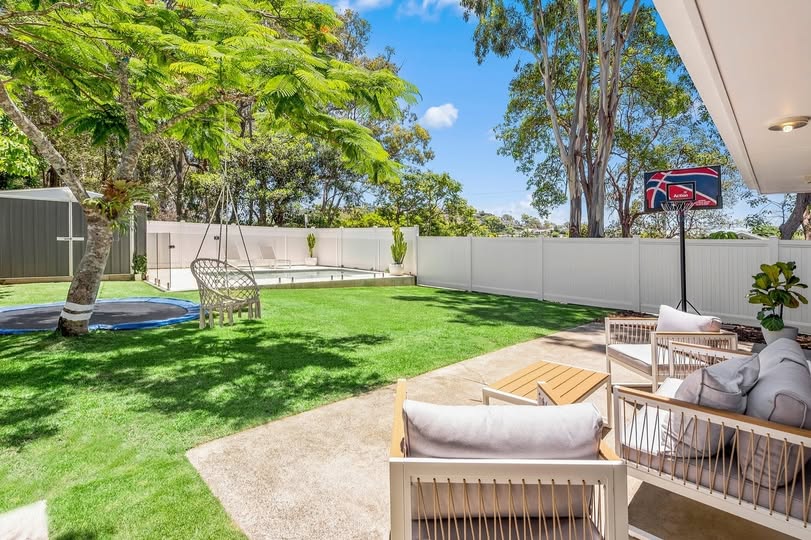
A larger deck flowing naturally into the garden
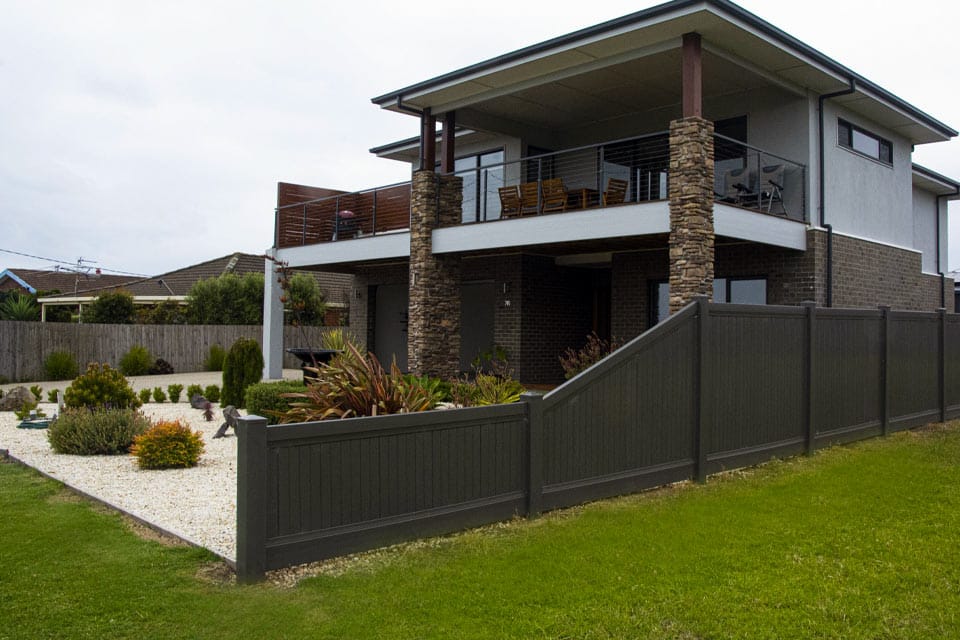
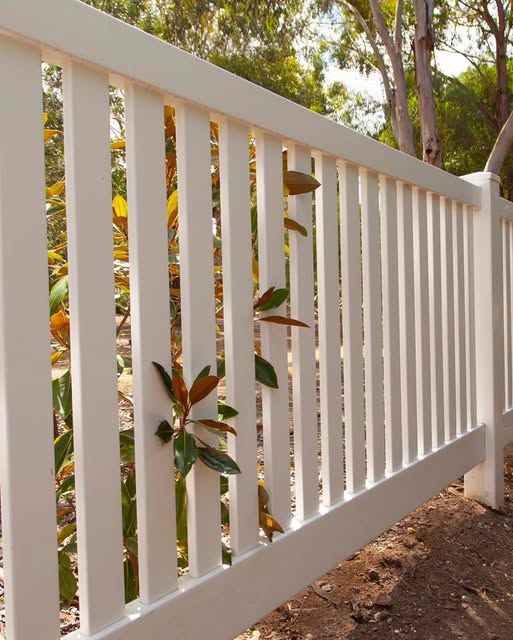
PVC fencing that complements the deck colour
Defined zones for entertaining and relaxing
A cohesive outdoor space that feels designed rather than assembled
Even relatively simple changes can dramatically improve how a backyard looks and functions.
Creating Visual Flow with Coordinated Colour Palettes
One of the easiest ways to achieve a cohesive outdoor design is through coordinated colours and materials.
Rather than trying to match materials perfectly, the goal is to create a palette that works together.
Warm timber tones matched with neutral boundary fencing
Dark charcoal decks complemented by modern grey fencing
Modern PVC fencing and composite decking systems make this coordination much easier because colours are manufactured with precision and remain consistent over time.
Unlike timber, which weathers unpredictably, engineered materials maintain their intended appearance year after year.
The Advantage of Choosing a Single Manufacturer
Many homeowners don’t realise how much easier a project becomes when fencing and decking products come from the same manufacturer.
Working with a single supplier often means:
Colours are designed to complement each other
Materials are engineered to perform together
Installation processes are simpler
Warranties and product support are consistent
This removes the guesswork involved in matching products from different brands and ensures the final result feels intentional.
It can also simplify the installation process for contractors, reducing delays and compatibility issues during construction.
A Simple Planning Checklist for Homeowners
If you’re considering both fencing and decking, it helps to plan the space as a whole before construction begins.
A few early design decisions can make a big difference.
Planning your outdoor space
Decide where privacy is most important
Consider how the deck connects to the house and garden
Choose colours that work together across materials
Plan gates, pathways, and access points
Think about how the space will be used for entertaining or relaxing
Coordinate installation timing if both elements are being installed
Taking time to think through these details early helps ensure the finished space feels balanced and functional.
Introducing OneDeck: A Natural Companion to PVC Fencing
Designed for Australian conditions, One Deck offers the durability and low-maintenance benefits homeowners increasingly expect from modern outdoor materials.
The boards feature UV-stable capping and heat-reflective technology, helping them maintain colour and performance even in harsh sun exposure.
When paired with PVC fencing, the result is an outdoor space where materials work together visually and structurally, creating a unified design that lasts for decades.
A Better Way to Design Outdoor Living Spaces
Designing fencing and decking as a single project changes how an outdoor space feels and functions.
Instead of separate structures competing for attention, the elements work together to define zones, frame views, and create a natural flow between the house and the landscape.
The benefits extend beyond aesthetics:
Simpler material coordination
More efficient installation
Consistent product warranties
A cohesive outdoor environment that adds value to the home
By approaching outdoor improvements with a unified design mindset, homeowners can create spaces that are more functional, more beautiful, and far more enjoyable to live with over time.
Discover how advanced recycling technology transforms post-industrial waste into durable, sustainable recycled PVC fencing solutions that protect our environment while delivering superior performance for residential and rural applications.
Turning PVC Waste Into High-Performance Fencing
PVC is one of the most durable materials used in construction. It’s strong, weather resistant and long lasting. But like many building materials, manufacturing creates waste.
Offcuts, rejected profiles and production overruns have historically ended up in landfill because recycling PVC at scale is technically difficult.
Rather than treating PVC waste as an unavoidable by-product of production, we made it the starting point for a better solution.
The Problem With PVC Waste
Across Australia, thousands of tonnes of PVC waste are generated every year through manufacturing and construction.
For decades, much of this material has been difficult to recycle. PVC degrades under heat and can contaminate other plastic streams, which means many recycling facilities simply reject it.
As a result, large volumes of perfectly usable material have traditionally been sent to landfill.
Yet PVC itself remains an incredibly valuable material because of its durability, structural strength and resistance to weather.
The real challenge isn’t the material. It’s finding better ways to keep it in use.
A Different Approach to Recycling
Think Manufacturing partnered with CSIRO to explore how complex PVC waste streams could be recycled and reused in durable building products.
Through years of development, the team created advanced recycling and compounding processes capable of transforming post-industrial PVC waste into stable, high-performance composite materials.
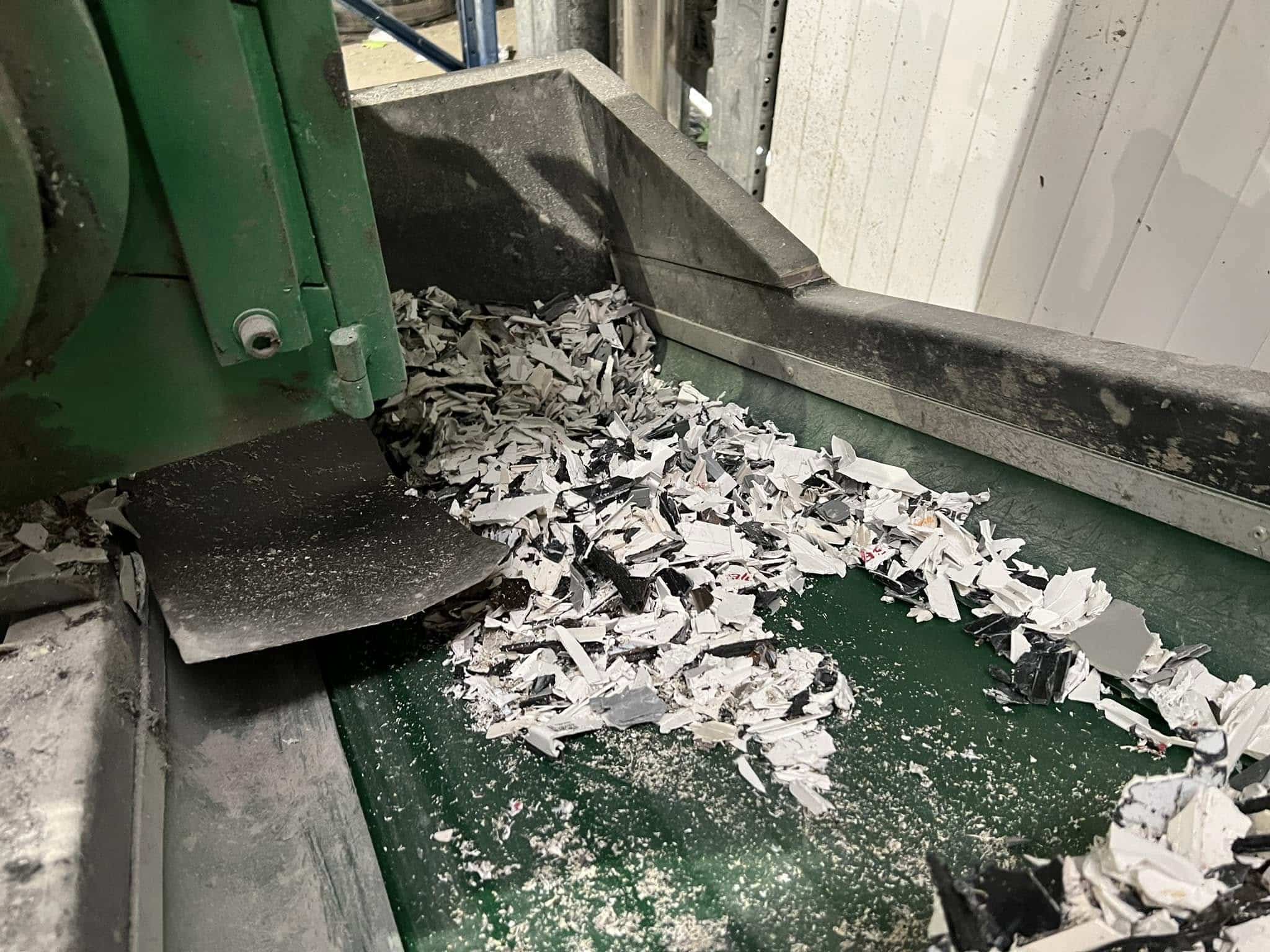
The process begins by collecting PVC waste from manufacturing operations where offcuts and rejected material accumulate.
That material is then:
Sorted and cleaned
Ground into uniform particles
Stabilised through proprietary formulations
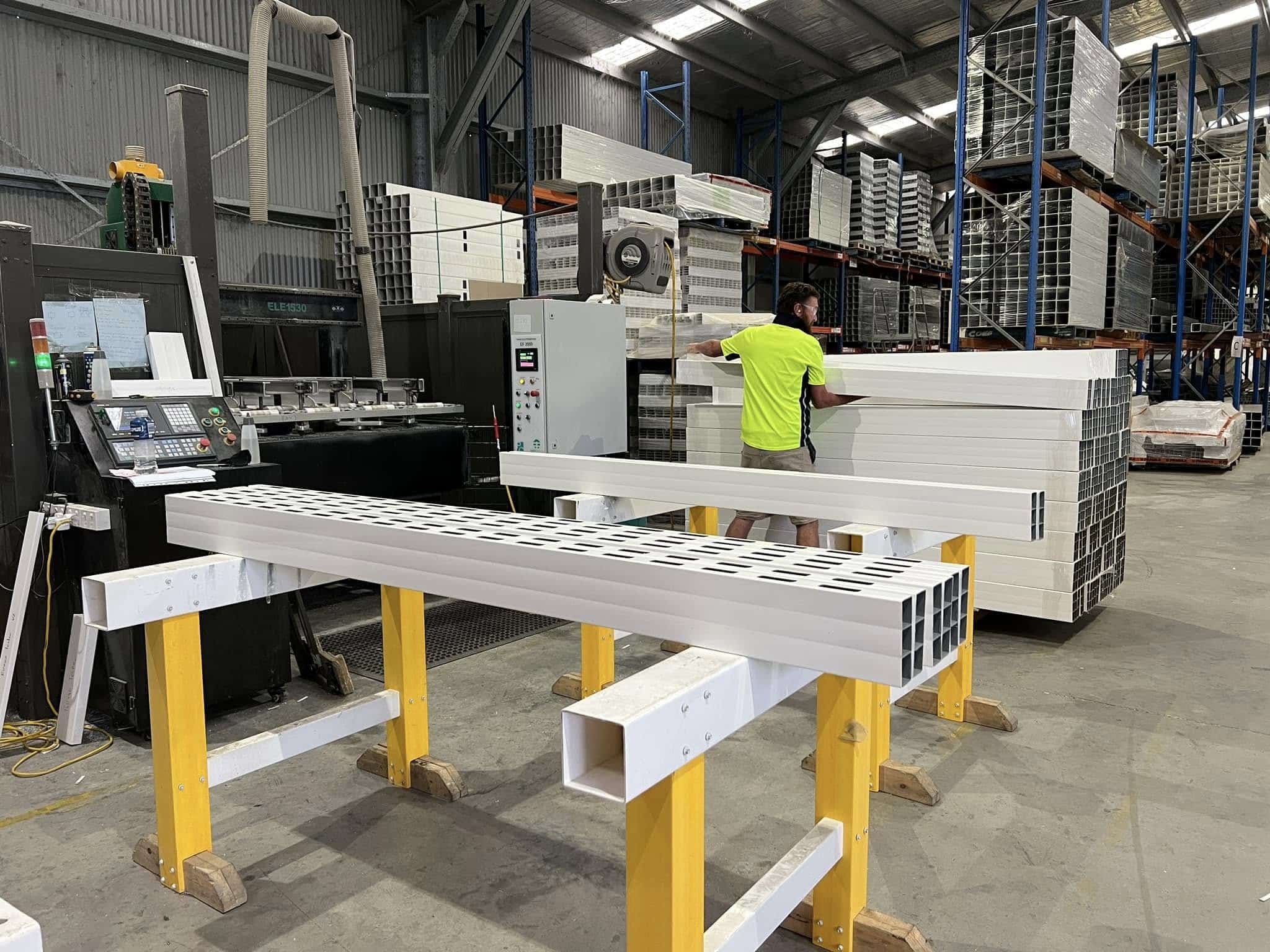
Reprocessed into engineered composite profiles
These recycled composites are then extruded into fencing components including posts, rails and panels.
The result is a material designed to deliver the durability and structural performance expected from modern fencing systems.
Diverting Waste From Landfill
Recycling PVC waste has two important environmental benefits.
First, it prevents large volumes of material from entering landfill where plastics can persist for centuries.
Second, it reduces the need to manufacture new virgin material.
By giving PVC waste a second life in long-lasting products, the material remains in circulation for decades rather than being discarded after a single use.
This approach aligns with Think Manufacturing’s commitment to what we call our War on Waste. It’s about actively finding ways to reduce waste in the building materials industry.
Performance That Lasts
Sustainability means little if the final product can’t perform.
Recycled PVC fencing is engineered to withstand the conditions that cause traditional fencing materials to fail.
Unlike timber, PVC does not rot, split or absorb moisture. It maintains dimensional stability and structural integrity even in harsh weather conditions.
The material is also resistant to insects, corrosion and environmental degradation, which removes the need for chemical treatments and regular maintenance.
For property owners, this means a fence that stays straight, strong and visually consistent for decades.
Systems like Titan Rail combine recycled PVC components with high-tensile wire to create safe, highly visible fencing solutions for horse properties and rural land.
The PVC components provide visual definition while the wire delivers the strength needed to contain livestock safely.
Recycling PVC waste isn’t just about reducing landfill. It’s about rethinking how materials move through the entire manufacturing lifecycle.
Rather than following the traditional path of extraction, use and disposal, recycled PVC fencing helps create a circular system where materials are continually reused.
Waste from one manufacturing process becomes the raw material for another
Products are designed to last longer
Materials can be recovered and recycled again at end of life
A Better Way to Build
Building products are typically judged by cost and durability. Increasingly, they are also judged by their environmental impact.
By transforming PVC waste into durable fencing systems, Think Manufacturing is proving that performance and sustainability don’t need to be competing priorities.
Instead of accepting waste as inevitable, we’re turning it into the foundation of long-lasting products that support a more responsible manufacturing future.
Discover the engineering truth behind “zero maintenance” claims and why understanding this terminology matters for long-term performance, durability, and lifecycle costs in modern fencing and decking systems.
The term “zero maintenance” has become common across the fencing and decking industry, yet it remains one of the most misunderstood concepts in building materials specification.
From an engineering perspective, no outdoor building material can truly claim absolute zero maintenance. What manufacturers are usually referring to is the elimination of scheduled preservation treatments that traditional timber systems require.
Understanding this distinction is critical when planning long-term infrastructure or managing client expectations.
Cleaning vs Structural Maintenance
When evaluating maintenance claims, it’s important to separate routine cleaning from structural preservation.
Traditional timber fencing requires ongoing treatment to prevent deterioration. Typical maintenance includes:
Staining
Sealing
Protective coatings
Rot and insect protection
Modern composite systems remove these preservation protocols entirely.
However, they still require occasional cleaning to maintain appearance. That difference forms the foundation of honest maintenance discussion in the industry.
A Shift Driven by Material Science
What the industry is actually witnessing is a shift away from preservation-dependent materials toward inherently stable composite formulations, like PVC.
These materials resist:
Biological degradation
Moisture penetration
UV deterioration
The protection is built directly into the material itself rather than applied as surface treatments.
This represents genuine innovation. But the terminology should reflect engineering reality rather than marketing exaggeration.
Engineering Standards That Define Low Maintenance Fencing
True low-maintenance performance in composite fencing systems can be measured using specific engineering criteria.
These include:
Dimensional stability during thermal cycling
Colourfastness measured in grey scale units
Impact resistance at temperature extremes
Resistance to fungal and insect colonisation
These metrics provide objective benchmarks that allow engineers and designers to assess real material performance beyond marketing claims.
Colour-Through Manufacturing
One of the most important advancements in low maintenance fencing systems is colour-through manufacturing.
Traditional coated materials rely on a surface layer. When that layer becomes damaged, the underlying substrate is exposed, requiring repair or refinishing.
Colour-through extrusion solves this problem by integrating pigmentation throughout the entire profile.
This means:
Scratches reveal the same colour underneath
Impacts do not expose a contrasting substrate
Cosmetic damage does not require repainting or refinishing
The process involves blending UV-stable pigments into polymer matrices before extrusion, ensuring colour consistency from surface to core.
Standards and Performance Testing
Australian Standards such as AS 3996 and AS 4687 provide frameworks for evaluating slip resistance and impact performance in external applications.
However, standards specifically targeting composite fencing systems remain limited.
To address this gap, leading manufacturers conduct extensive testing that measures:
Long-term creep resistance
Fastener pull-through strength
Accelerated UV exposure
Weathering performance over simulated decades of use
These engineering validations help distinguish substantiated performance claims from marketing assertions.
Why Material Science Matters More Than Marketing Promises
The difference between genuinely low-maintenance composite fencing systems and those requiring ongoing intervention lies in material formulation at the molecular level.
Rather than applying protective coatings after manufacturing, these additives create inherently stable material matrices resistant to environmental degradation.
ASA Capping Technology
One example of material science solving maintenance challenges is ASA (Acrylonitrile Styrene Acrylate) capping technology.
ASA polymers provide superior UV resistance compared with standard PVC formulations. When co-extruded as a protective cap layer over composite cores, they create a durable barrier against solar exposure.
This approach allows the material to weather gradually without requiring restoration treatments.
Instead of maintenance schedules, performance becomes a function of the material itself.
Graffiti Resistance and Cleanability
Material formulation also determines how easily surfaces can be cleaned.
Quality composite systems undergo testing using common marking materials such as:
Permanent markers
Spray paint
Adhesive labels
Properly formulated composites allow most graffiti to be removed using mild detergent and non-abrasive cloths. More stubborn marks may respond to solvents such as isopropyl alcohol without damaging the surface.
Systems that fail these tests create hidden maintenance burdens that contradict zero-maintenance claims.
Recycled PVC and Sustainable Engineering
The material science behind recycled PVC composites also contributes to long-term performance.
Advanced composite formulation technologies, developed through research collaboration with organisations such as CSIRO, enable recycled PVC to be incorporated into high-performance matrices without sacrificing durability.
This allows manufacturers to produce materials that maintain:
Dimensional stability
Impact resistance
Weathering performance
while simultaneously diverting waste from landfill.
Environmental responsibility and engineering performance are not mutually exclusive.
The Real Cost of Ownership
The financial impact of maintenance becomes clear when analysing total cost of ownership over a 25-year lifespan.
Conservative estimates place timber maintenance at 6–8 hours per 100 linear metres annually, accumulating 150–200 hours over the system’s life.
The Value of Time
For many property owners, time represents one of the most significant hidden costs.
Where timber systems require repeated sanding and refinishing, composite systems generally require only occasional washing with standard hose pressure.
Over 25 years, this difference can equate to 180–195 hours saved per 100 linear metres.
For large rural properties or commercial installations, these labour savings multiply significantly and directly affect operational budgets.
Hidden Replacement Costs
Maintenance is only part of the equation.
Timber fencing gradually deteriorates between treatment cycles due to moisture absorption, UV exposure, and biological attack. This progressive degradation often leads to component replacement long before the fence reaches its theoretical lifespan.
Composite systems avoid these cycles through inherent material stability, reducing both labour and replacement costs.
Risk and Liability Considerations
Structural performance also influences risk management.
In equine fencing applications, structural failure can pose serious safety risks. Materials that rely on scheduled preservation introduce uncertainty into risk assessments, particularly if maintenance lapses or environmental conditions accelerate degradation.
Composite systems engineered for inherent stability offer more predictable performance, which may influence insurance considerations for commercial facilities.
What You Should Expect From Modern Composite Systems
Setting realistic expectations for composite materials is essential.
High-quality systems genuinely eliminate the need for preservation treatments. This means no staining, sealing, or chemical treatment schedules.
They resist rot, insect damage, and fungal colonisation while maintaining structural integrity over decades.
UV-stable formulations also preserve colour performance, typically fading 5–10% over decades rather than experiencing the rapid greying and checking common in untreated timber.
Cleaning Expectations
Composite fencing is not completely maintenance-free. Instead, it requires minimal routine cleaning.
Most installations benefit from:
Low-pressure washing
Mild detergent cleaning
Occasional spot cleaning for marks or dirt
In most environments this occurs once or twice per year.
This represents a very different form of maintenance than structural preservation.
Aesthetic Differences
Composite materials also present different visual characteristics compared to timber.
Timber offers organic grain variation and natural texture. Composite materials provide a more uniform appearance with consistent colouration and finish.
For some designers this consistency suits contemporary architecture. Others may prefer timber’s natural variability.
Understanding these aesthetic differences prevents dissatisfaction caused by misaligned expectations rather than performance issues.
Thermal Performance
Thermal behaviour is another factor to consider.
Composite materials exposed to direct sunlight will generally reach higher surface temperatures than timber due to their thermal properties.
However, modern systems increasingly incorporate heat-reflective pigments and ventilation design features that reduce heat retention.
Products such as OneDeck integrate ventilation chambers that improve airflow and thermal performance compared with solid composite boards.
Material selection should still consider factors such as solar orientation, shading opportunities, and intended usage.
Systems like Titan Railcombine composite rails with high-tensile wires and electrification capability while maintaining structural stability and preservation-free performance.
This represents the evolution of the “zero maintenance” concept toward integrated performance systems that address durability, sustainability, safety, and reduced maintenance through thoughtful engineering.
The terminology may still be debated.
But the underlying innovation, materials engineered for long-term stability rather than ongoing preservation, represents a genuine advancement in fencing and decking technology.
Discover how locally manufactured PVC fencing systems deliver superior durability, compliance, and sustainability compared to overseas alternatives—backed by Australian engineering excellence and climate-specific design.
Engineering Excellence Designed for Australian Conditions
Australia’s climate presents unique challenges that many imported fencing systems simply aren’t engineered to handle.
UV radiation levels are among the highest in the world. Temperature extremes range from coastal humidity to inland aridity. Seasonal weather patterns vary dramatically across the continent.
These conditions place significant stress on outdoor materials.
PVC fencing manufactured overseas is typically engineered for milder European or North American climates. When exposed to Australian conditions, these materials often degrade far more quickly than expected.
Local manufacturers design PVC compounds to withstand the precise environmental stresses that occur in Australia.
These formulations typically incorporate:
Advanced UV stabilisers calibrated for Australian sun intensity
Impact modifiers for temperature extremes
Heat stabiliser packages to prevent chalking and colour shift
Higher concentrations of titanium dioxide for UV reflection
Wall thickness and structural design are also engineered with Australian wind loading and impact resistance requirements in mind.
This climate-specific engineering addresses degradation mechanisms such as photo-oxidation, thermal cycling, and moisture interaction that occur under prolonged Australian exposure.
Performance Proven Through Testing
Independent testing highlights the difference between locally engineered and imported systems.
Australian-manufactured PVC fencing demonstrates stronger performance across several key measures:
Colour retention
Impact resistance
Dimensional stability
Long-term weathering performance
These results are based on accelerated weathering tests designed to replicate decades of Australian sun exposure.
Imported alternatives frequently show premature deterioration in the same tests, including brittleness, discolouration, and surface chalking within only a few years of installation.
Quality Assurance and Compliance Standards
Material formulation is only part of the equation. The real difference between Australian and imported fencing often lies in manufacturing oversight and quality assurance.
Australian manufacturers operate under strict regulatory frameworks that govern production processes, workplace safety, and product compliance.
This ensures consistent product quality and reliable batch-to-batch performance.
Manufacturing Oversight
On-shore production allows comprehensive quality control throughout the manufacturing process.
Australian facilities monitor:
Raw material verification
Extrusion process consistency
Finished product inspection
Batch traceability and documentation
These processes are typically aligned with ISO quality management systems and Australian manufacturing standards.
With imported products, quality control documentation may be incomplete, testing protocols may vary, and consistency between shipments can be unpredictable.
Compliance with Australian Standards
Another critical advantage of Australian-made PVC fencing is verified compliance with local building standards.
Products are commonly tested through NATA-accredited laboratories to ensure compliance with Australian requirements for structural performance, safety, and durability.
These certifications provide genuine assurance that fencing products meet the expectations of:
Residential installations
Commercial projects
Government infrastructure developments
Compliance documentation is particularly important where building regulations or project specifications require certified materials.
Warranty and Consumer Protection
Warranty support is another area where local manufacturing offers clear advantages.
When an Australian manufacturer provides a warranty, the company operates under Australian Consumer Law and remains accessible if issues arise.
Imported products may advertise similar warranty periods. However, enforcement can become difficult when manufacturers operate offshore, importers change suppliers, or distribution companies cease trading.
In those situations, property owners may be left with failed fencing and limited recourse.
Sustainable Manufacturing and Environmental Responsibility
The sustainability profile of Australian-made PVC fencing extends beyond the product itself to include manufacturing processes, transportation emissions, and waste management.
Reduced Transport Emissions
Imported fencing products typically travel thousands of kilometres by container ship before reaching Australia.
This adds significant transportation emissions to the product’s environmental footprint.
Locally manufactured fencing travels far shorter distances from factory to installation site.
As a result, the embodied carbon in the delivered product can be reduced by up to 70% compared with imported alternatives.
Closed-Loop Recycling Innovation
Australian manufacturers are also investing in advanced recycling technologies.
Think Manufacturing, for example, has developed proprietary recycling processes in collaboration with CSIRO that convert PVC waste streams into valuable feedstock for new fencing products.
This allows recycled PVC to be incorporated into fencing systems while maintaining structural performance and aesthetic quality.
The result is a genuinely circular product lifecycle where materials are reused rather than discarded.
Supporting the Australian Circular Economy
Choosing locally manufactured fencing also supports the broader Australian economy.
Local manufacturing:
Employs Australian workers
Supports regional supply chains
Funds research and development within Australia
Strengthens advanced manufacturing capabilities
These contributions help build a more resilient and sustainable domestic industry.
Long-Term Durability and Total Cost of Ownership
Imported fencing often appears cheaper at the point of purchase.
However, a total cost of ownership analysis usually tells a very different story once durability, maintenance requirements, and replacement cycles are considered.
Durability Differences
Imported PVC fencing that is not engineered for Australian UV exposure can begin showing degradation within 3–5 years.
Common issues include:
Colour fading
Surface chalking
Brittleness
Cracking
Australian-engineered PVC systems, by comparison, maintain structural integrity and appearance for 25–30 years or more under the same environmental conditions.
Maintenance Requirements
Australian-made PVC fencing requires minimal maintenance. In most cases, occasional washing with water is sufficient to maintain appearance.
There is no need for painting, sealing, or chemical preservation treatments.
Imported fencing that deteriorates more quickly often requires additional maintenance interventions as degradation progresses, including repairs and more frequent cleaning.
Replacement Costs
One of the most significant hidden costs of imported fencing is premature replacement.
If imported fencing requires replacement after 10–15 years, while locally engineered fencing continues performing for 25+ years, the apparent upfront savings quickly disappear.
Additional labour, disposal costs, and project disruption further increase the long-term expense.
When these factors are considered, Australian-made PVC fencing consistently delivers lower lifetime ownership costs.
Supply Chain Reliability and Local Support
Recent global supply disruptions have highlighted the importance of reliable supply chains.
Local manufacturing provides significant advantages in this area.
Faster Lead Times and Reliable Supply
Australian manufacturers maintain inventory within the country and operate production facilities that respond directly to local demand.
This enables:
Shorter lead times for standard products
Faster turnaround for custom orders
More reliable product availability
Import-dependent suppliers often face extended lead times driven by shipping schedules, container availability, and international freight disruptions.
Local Technical Support
Australian-made fencing is supported by local technical expertise.
Manufacturers provide installation guidance, product support, and troubleshooting from professionals who understand Australian construction practices and environmental conditions.
This support network often includes:
Trained installers
Product documentation tailored to Australian conditions
Responsive customer service teams
Such support can be critical when questions arise during installation or maintenance.
Long-Term Product Availability
Local manufacturing also ensures product continuity.
Australian suppliers maintain consistent formulations and product lines, meaning fencing installed today can be matched in the future for repairs, extensions, or staged projects.
Imported product ranges often change between shipments or disappear entirely when suppliers switch factories or manufacturers.
Supporting Australian Manufacturing
Purchasing Australian-made PVC fencing products also contributes to the broader economy.
Local manufacturing supports jobs, strengthens regional industries, and contributes tax revenue that benefits communities across the country.
For government projects, defence installations, and infrastructure developments, Australian-made materials also help meet procurement policies that prioritise local content and supply chain security.
Australian-Made PVC Fencing: The Smarter Long-Term Choice
Australian-made PVC fencing delivers a combination of advantages that imported alternatives struggle to match.
It offers:
Engineering designed specifically for Australian conditions
Verified compliance with local standards
Stronger quality control and warranty support
Reduced environmental impact
Greater supply chain reliability
While imported products may appear cheaper initially, the long-term performance, durability, and support offered by Australian manufacturing consistently deliver greater value.
For property owners, contractors, and commercial developers seeking durable fencing solutions built to withstand Australian conditions, locally manufactured PVC fencing represents the smarter long-term investment.
Discover why initial investment costs only tell half the story when evaluating timber vs PVC fencing solutions for long-term property infrastructure.
Understanding The True Cost Of Fencing Beyond Purchase Price
When evaluating fencing solutions for equine properties, commercial sites, or residential properties, the sticker price represents only a fraction of the total cost equation.
A comprehensive cost analysis must extend beyond the initial outlay to include maintenance expenditure, replacement frequency, labour allocation, and operational disruption over the asset’s lifecycle. This broader framework, known as total cost of ownership (TCO), provides a far more accurate foundation for infrastructure investment decisions.
Consider a typical 200-metre perimeter fence installation. Timber fencing may initially cost $8,000–$12,000, while advanced PVC fencing typically ranges from $14,000–$18,000 for equivalent coverage.
On day one, timber appears to offer roughly a 40% cost advantage.
However, this comparison does not account for the dramatically different maintenance and replacement trajectories these materials follow under Australian conditions.
The Hidden Year-One Costs
The initial gap narrows once essential treatments are factored in.
Timber requires immediate sealing and protective coating application to guard against moisture infiltration, UV degradation, and insect damage. This typically adds $800–$1,200 in materials and labour during the first year alone.
PVC fencing systems require no such treatment. They arrive with integrated UV stabilisers and weather-resistant formulations engineered into the material itself.
This represents the first indication that purchase price alone provides an incomplete picture of long-term infrastructure investment.
Maintenance Requirements Over 20 Years
The financial divergence becomes clear across two decades.
Timber fencing demands ongoing treatment every 18–24 months to maintain both structural integrity and aesthetic appeal. For a 200-metre fence, each maintenance cycle typically involves 24–32 labour hours and $600–$900 in materials. When professional labour rates of $50–$60 per hour are included, each cycle totals $1,800–$2,400.
Over 20 years, timber fencing requires approximately 10 major maintenance interventions, accumulating $18,000–$24,000 in treatment costs alone. Fastener replacement, post reinforcement, and picket repairs commonly add a further $3,000–$5,000 during that period.
These figures assume consistent maintenance adherence. Deferred maintenance accelerates deterioration and shortens the overall lifespan of the fence.
PVC systems present a markedly different profile. Annual maintenance typically consists of occasional washing with standard cleaning products. Across 20 years, total maintenance expenditure generally falls between $400–$600, representing a 97% reduction compared to timber.
The cost savings are significant. The operational simplicity is equally compelling.
Durability In Australian Conditions
Australia’s climate places significant stress on fencing infrastructure. High UV exposure, salt-laden coastal air, inland temperature extremes, and tropical moisture all accelerate material degradation.
Timber fencing typically offers a serviceable life of 10–15 years, depending on species selection, treatment quality, and maintenance consistency. Premium hardwoods such as ironbark or spotted gum may extend lifespan to 15–18 years, though at 60–80% higher initial cost.
Even high-grade hardwoods eventually experience checking, splitting, warping, and grain separation. Posts in ground contact often require replacement within 8–12 years due to moisture and termite exposure.
PVC fencing engineered from recycled materials behaves differently. Composite formulations incorporating UV stabilisers and impact modifiers maintain structural integrity for 25–30+ years. The material does not absorb moisture, does not rot, and does not attract insect damage. Dimensional stability prevents warping and twisting across temperature fluctuations.
From a replacement perspective, the difference is substantial.
A timber fence typically requires full replacement around year 12–15, effectively doubling infrastructure investment within a 20-year window. PVC fencing remains fully functional throughout that period with no replacement requirement.
Timber represents a renewable resource when responsibly sourced. However, the chemical treatment processes required for durability introduce environmental complexity. Preservatives such as CCA contain heavy metals that may leach into soil and create disposal challenges at end-of-life.
A 200-metre timber fence replacement generates approximately 2–3 cubic metres of treated timber waste. Because treated timber cannot be recycled, composted, or safely burned, most material enters landfill.
Advanced PVC fencing manufactured from recycled materials presents a different sustainability model. Diverted plastic waste is transformed into durable infrastructure, reducing landfill reliance and extending product lifespan to 25–30+ years.
Through research and development collaboration with institutions such as CSIRO, proprietary recycling technologies enable conversion of difficult-to-recycle PVC waste streams into high-performance composite formulations suitable for demanding applications.
At end-of-life, PVC materials remain recyclable, supporting circular economy principles and measurable environmental reporting outcomes.
20-Year ROI Comparison – Domestic Residential Example
20-Metre Frontage Fence. Eg. A 900mm high picket fence with a single personnel access gate.
Timber
Year 0: $1,600–$2,400
Maintenance (20 years): $4,000–$5,000
Replacement (Year 12–15): $2,500–$3,500
Total 20-year cost: approx. $8,000–$10,000
These figures assume professional maintenance. If homeowners choose to complete the work themselves, the financial outlay may be reduced, but the time commitment becomes substantial. Sanding, prepping, and repainting a 20-metre fence every couple of years can consume full weekends. Across two decades, this equates to dozens of hours dedicated to maintenance rather than enjoying the property.
PVC
Year 0: $3,000–$4,000
Maintenance (20 years): $100–$200
Replacement: $0
Total 20-year cost: approx. $3,100–$4,200
Even at residential scale, PVC can deliver $4,000–$6,000 in savings over 20 years, while eliminating recurring labour and upkeep.
For many homeowners, the time saved is as valuable as the money saved.
The Bigger Decision when considering timber vs PVC fencing
The investment decision ultimately comes down to infrastructure philosophy: short-term cost minimisation versus long-term value optimisation.
Property owners and facility managers focused on lifecycle cost management, operational continuity, and sustainability alignment will find compelling value in advanced PVC fencing solutions.
The upfront investment is higher. The long-term outcome is significantly stronger.
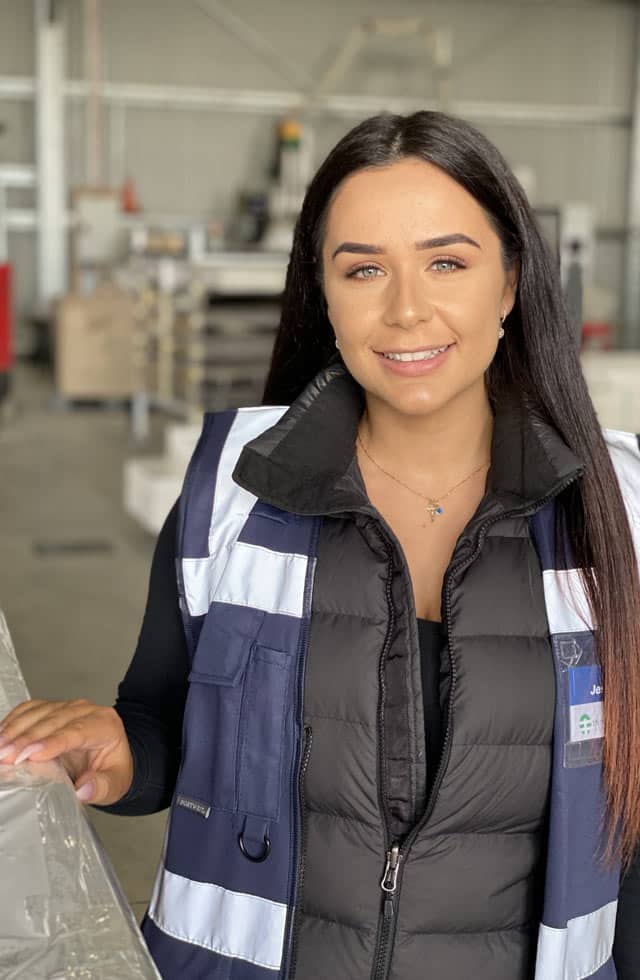
If you have ever called the Think Fencing office, then there is a good chance you and I have chatted about your fencing project… My name is Jess! I have been working at Think Fencing for just over 4 years helping customers with their new fencing designs and orders.
Before starting at Think Fencing, I was working at a small Fish & Chips shop in Geelong and had never really had a customer service job.
Then the opportunity came up to work for Think Fencing. When I met the small team at Think Fencing for the Job interview I was hooked on how passionate the team is for helping people design and deliver a seemingly mundane product. As a 21 year old girl whose passion is Makeup and Macedonian Dancing I didn’t even know the difference between one fence to another.
Our job is to assist you with creating your dream fence.
My Job cooking fish and chips and dealing with the public, in some way, was going to set me up for designing and selling PVC fences! It all seemed a little scary at first as I had no idea what PVC even was – I am now a self proclaimed PVC fencing expert!
With the memory still fresh in my mind as to how little I knew of fencing, especially PVC fencing, I feel I am the most qualified to explain how our fencing systems work, and how we can make it work for you. As you may know, the team at Think Fencing do not do cold calling, we don’t have sales targets, or get paid commissions. Our job is to assist you with creating your dream fence. I can help you with all of the tricky questions and designs, such as “Can my fence be built on a slope”, or “How big does my gate need to be to get a 21 foot Jayco through”.
I love being able to help you on the design journey of your new fence. Just check out our reviews on Facebook or Google!! I can’t always take all the credit as I work with an amazing team.
Jess in the Factory
Let me tell you about a typical Think Fencing journey…
Starting a PVC fencing project requires answers to a number of questions, but no more than you could expect from any other kind of project. With the right assistance and guidance, you will achieve the perfect fence you’ve always dreamed of.
Clearing the site and removing the existing fencing
Here are some tips and considerations on organising your fencing project.
Things you may consider:
Can you remove the fence yourself? A lot of contractors are happy to not only quote the install but the removal of existing fences as well.
Is the fence line level or on a slope? The best way to figure this out is to hold a tight string line across your property and then measure the distance/gap underneath.
Information our sales team will need to know in order to quote your fencing project:
Which design would you like? Are you after the traditional picket fence look, a classy heritage style or a sleek modern look. Designs of our fencing can be found on our website or Product Catalogue.
How high would you like your fence? Is it to keep things in or to keep prying eyes out?
What colour fence would you like? We have 11 different colours to choose from. Starting with White and ending with our darkest colour Night Mist.
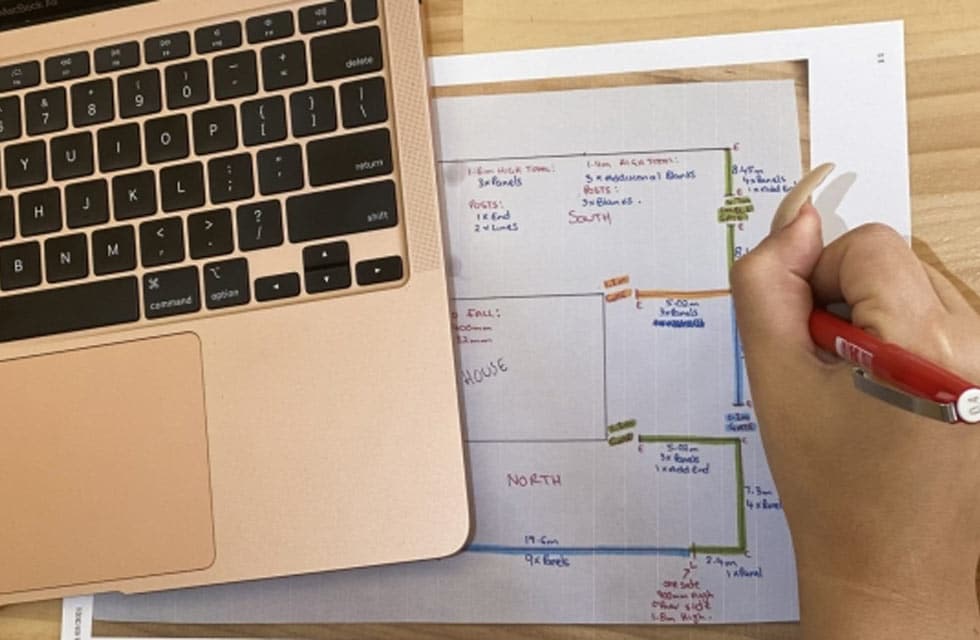
What are your measurements? This is where our sales team will require a very rough drawn sketch from you to assist us with quoting your fencing project accurately. It does not matter if the diagram is not perfect, we can’t all be Picasso!
Do you need any gates? We have a range of single, doubles & sliding gates to suit your opening requirements. Don’t want to get out of your car to open the gates? I know I don’t, that’s why we have Automation Systems for all sizes.
Can you install yourself?
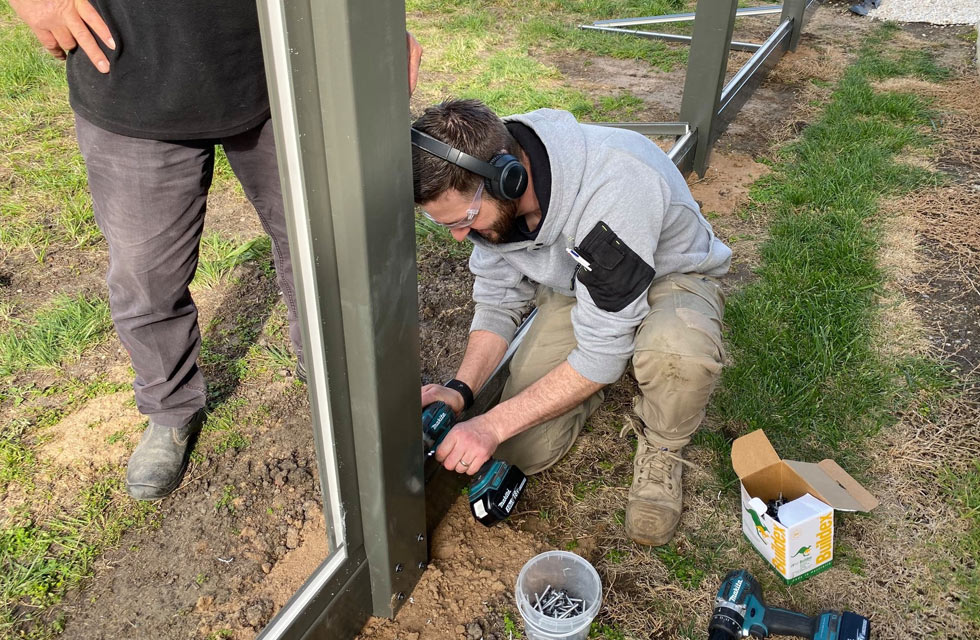
Our PVC fencing is made to be a DIY system. Are you able to measure & install the fencing yourself. No? Have no fear, we are happy to recommend installers that have worked with our products and are able to assist.
Keep in mind any handyman or fencing contractor should have no troubles installing our fence.
Talking to a contractor
Things you may consider:
Can you remove the fence yourself? A lot of contractors are happy to not only quote the install but the removal of existing fences as well.
Is the fence line level or on a slope? The best way to figure this out is to hold a tight string line across your property and then measure the distance/gap underneath.
Fencing Contractors
The most important thing to remember is that no questions are too silly. I’ve heard, and answered, them all.
Thanks for taking the time to have a read of how you can go about getting your perfect fence – hopefully we’ll be talking soon about making that fence a reality 🙂
Founded in 1999, Think Fencing has quickly established itself as Australia’s most respected PVC and composite fence manufacturer. One key aspect of our company’s success that has helped cement its position, is that all products are manufactured in Australia by us. Which is not only good for the local economy, but has enabled us to develop our PVC Fencing products to withstand Australia’s harshest weather conditions!
Residential Fencing
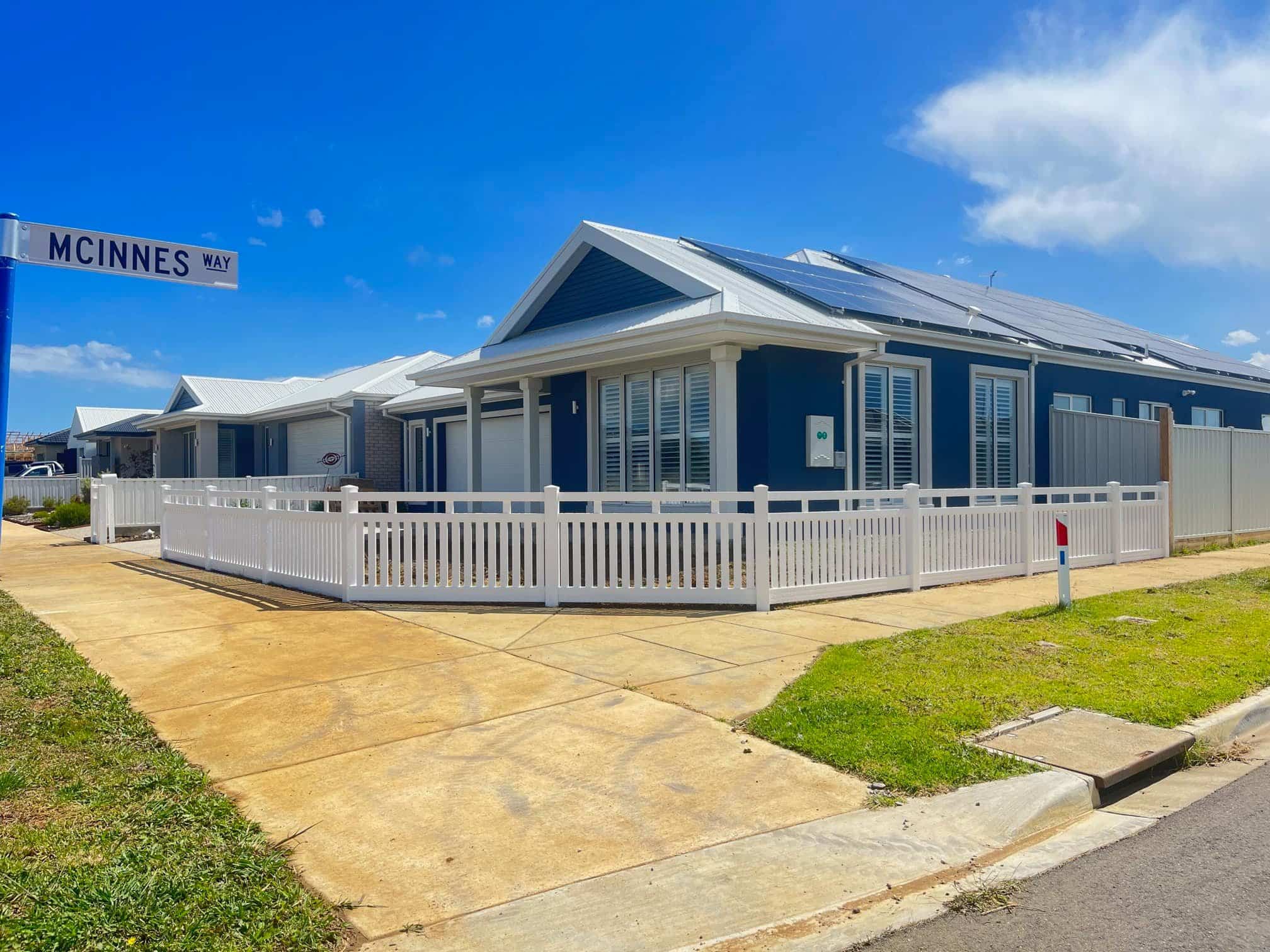
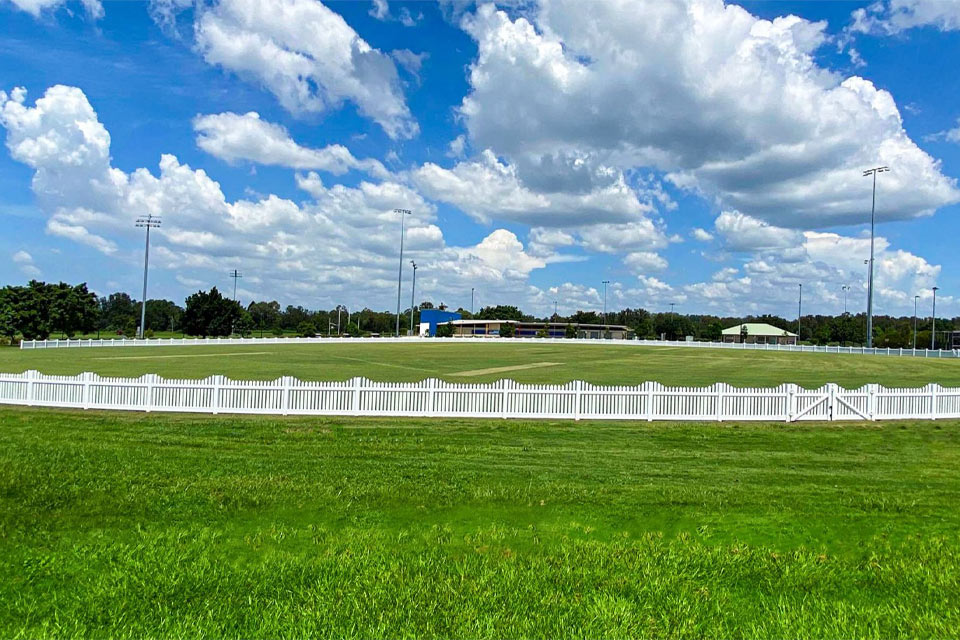
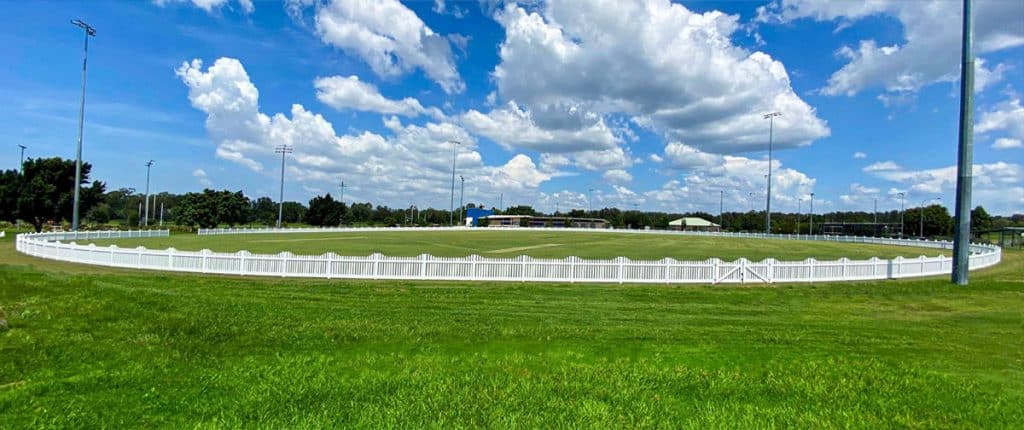
We supply many products including: PVC Picket Fencing for use in domestic applications, along with commercial fencing used in Cricket, AFL. In addition, other sporting grounds have used our PVC fencing including the Albany Cricket Ground. Our Picket Fencing’s pop-out railing system has been designed with player safety in mind that reduces the risk of player injury without compromising on the clean professional White Picket Fence look for the club and its patrons. All whilst being extremely low maintenance and durable.
Grey Mystique Privacy Fence
Horse Fencing
Our world class horse fencing systems have been the foundation upon which all other products have been created. Our Horse Fencing has been used by international horse studs and pony clubbers alike, from PVC dressage arenas, broadacre stud fencing and feature entrances. Our most popular horse fencing products are Equirail, Zappa Rail, and Timberline Post and Rail due to their horse safe construction and long life.
white zappa rail horse fence
Our Equirail and Zappa Rail Horse Fencing products can be used in conjunction with each other to create a strong fencing structure, attached to either timber or PVC fence posts.
Post and Rail Horse Fencing products are used on larger properties not only used as a barrier but also a clean long-term option for a rural fencing environment. This PVC fencing can be fitted with a conducting wire and energiser to create an elegant electrified fence system.
Fencing Technology
Think Fencing has been consistently improving its operations; from developing leading-edge manufacturing techniques and equipment, through to expanding the business to accommodate for new production lines.
We take our commitment to Australian manufacturing seriously and will continue to push back against cheaper imported products in favor of our high quality Aussie PVC fencing products using the latest technology and equipment.
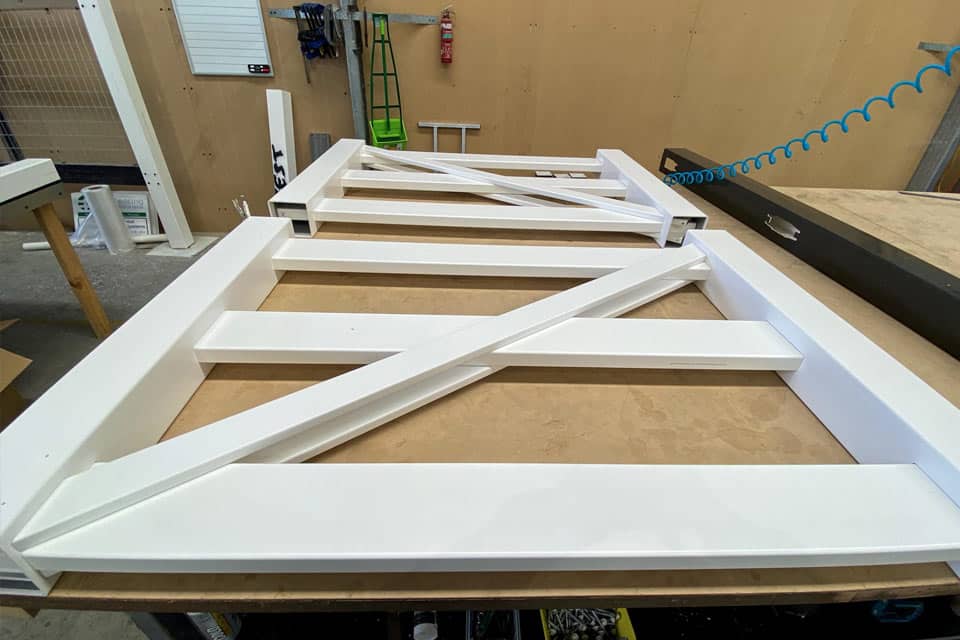
Factory Procedure
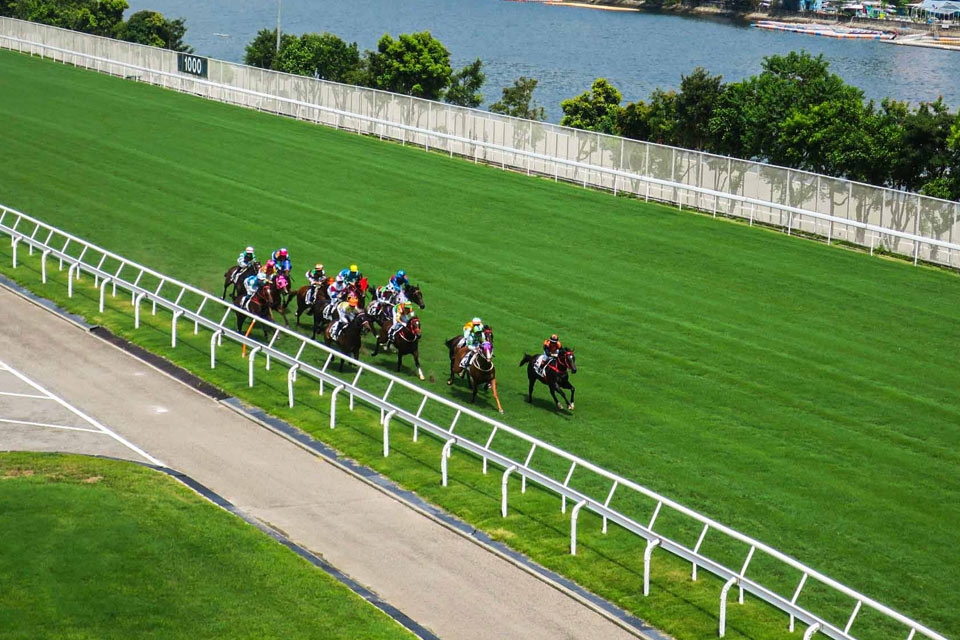
Horse race fence
Customer Service
Our pride lies mostly in the interaction between the business and the consumer, always putting the customer first. Throughout the sales process a dedicated customer service representative will be available for any queries before and after the purchase of your PVC fencing project. Also, as your PVC fence nears completion a team member from our fabrication department will help in making sure all aspects of your fence, be it a Picket Fence, Privacy screen or Horse fence are designed and fabricated to the correct dimensions.
Innovation and Technology
Through constant improvements in product manufacturing and sustainability, we are proud to have developed a world first in manufacturing decking using our own recycled PVC technology. And have been awarded a state government grant in 2020. The PVC decking will be in the final stages of development in early 2021. Our decking will consist of 95% recycled plastics derived from post and production PVC feedstock, including construction materials. By progressing into this sector we will expand our business significantly whilst providing more jobs for the local community. This technology and product range will also be addressing a significant environmental issue.
Picket fence
Our partners
We also work hard to help many leading-edge Australian companies develop their plastic products, leveraging our state of the art fencing technology. One example is Simtrack who are the world’s leading PVC racetrack running rail and starting gate manufacturer. We have worked hand in hand with Simtrack for almost a decade to develop and now manufacture their entire PVC running rail system under licence. Supplying such tracks as Flemington Race Club in Melbourne and ShaTin Raceclub in Hong Kong, along with over 100 metropolitan and regional racecourses.
Our products with simtrack - horse race
Our technology has also lent itself to working with a leading mechanical ventilation company ECO-DUCT to develop its range of Low Profile ducting. And are now the only company to not only to have achieved the accreditation of Best Environmental Practice PVC, but also adhere to the fire rating of UL181 and AS/NZ 1530.3
Innovation of further products and ways of thinking differently will always underpin the growth of Think Fencing. Our team is always changing the way Australia adopts new products. And I am proud to work for a company like that.
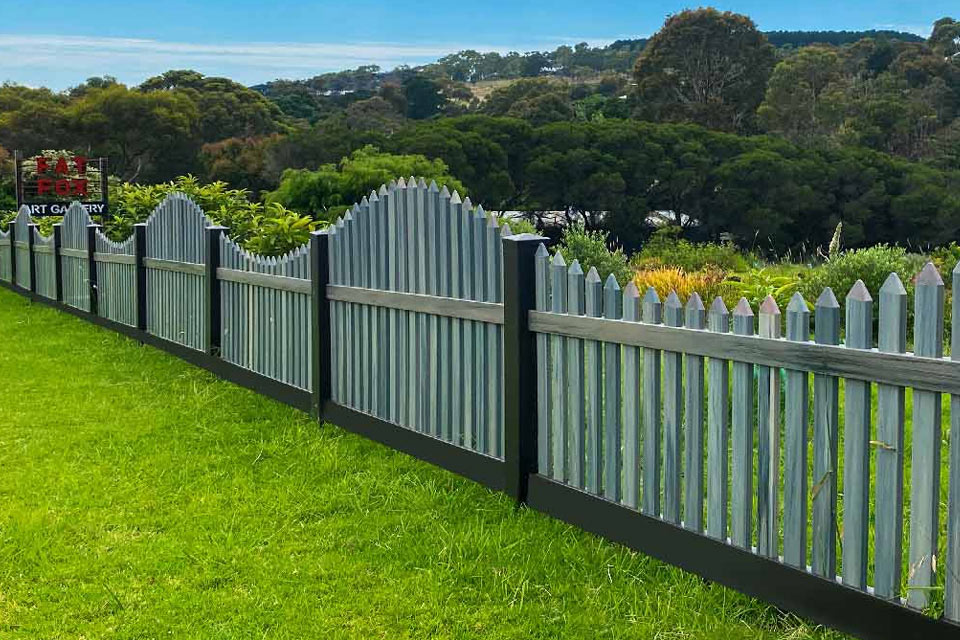
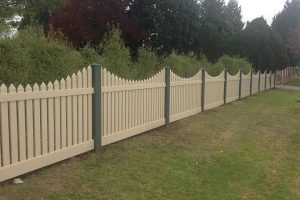
Picket fences fully customised
About the author
Brittany Roberts is one of our newest team members in the Sales and Administration team. Holding a Bachelor degree in Business, her playful exuberance is infectious with the sales team and customers alike. She enjoys the great outdoors and has a passion for interior design. She is also in the process of designing her very own “Tiny Home”.
PVC fencing is quickly becoming the preferred solution for many fence savvy owners. The team at think fencing have developed a unique accreditation programme empowering all Jims fencing contractors to have the opportunity to undergo an accreditation. The accreditation ensures correct installation procedures are met whilst allowing for our quality guarantee to be passed onto all PVC fence installation completed by Jims fencing.
Due to the fact that Think Fencing’s products are 100% Australian made and are available in an extensive range of colours and styles, it’s a smart choice for any home.
Bellbrae screening
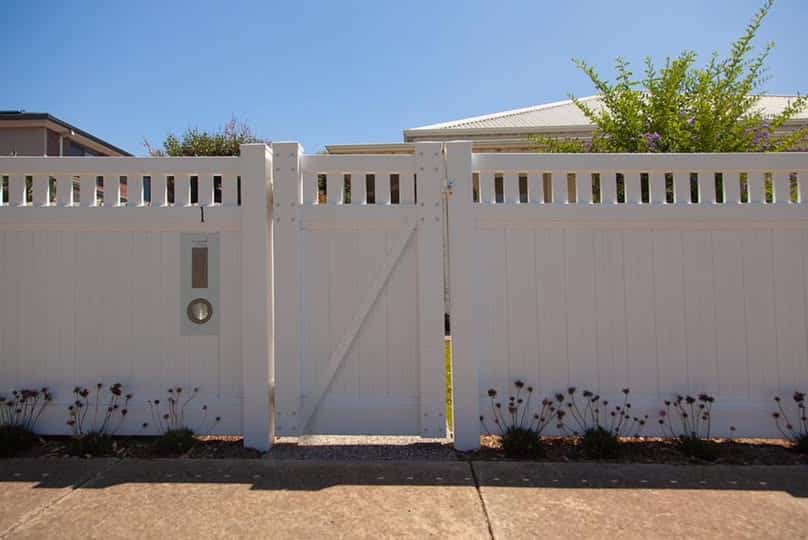
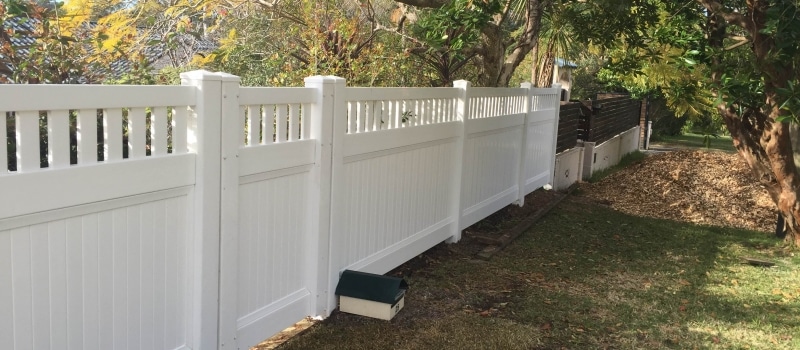
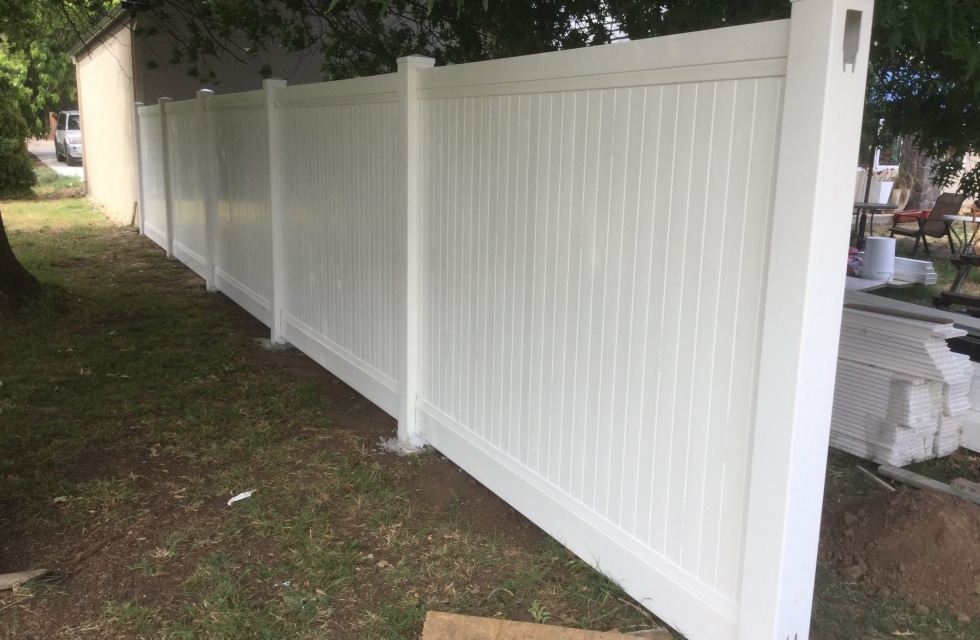
PVC privacy screen
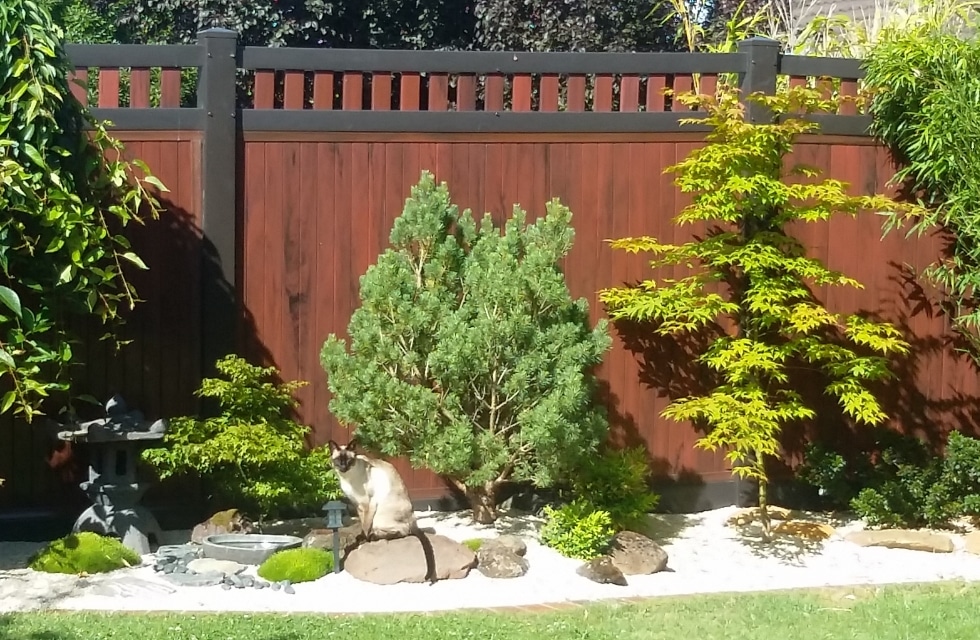
Shh.. Don’t tell anyone it’s plastic.
As standard Think Fencing offers a range of heritage and modern colours designed to complement any style of house. Think fencing uses technology enabling its fencing systems to be made with a woodgrain finish, making for a truly beautiful fence.
Thinking about the environment.
PVC fencing is fast gaining popularity due to its cost and low maintenance. PVC is a polymer derived from 57% Natural sea salt. Consequently Think Fencing’s range of fencing is the only fencing range worldwide, that is made using certified Best Practice PVC. With this being said it contains no harsh chemicals and its production adheres to strict environmental guidelines. Including using recycled material and being 100% Recyclable.
Installation
A PVC fence installed by Jim’s fencing comes with our quality guarantee. It will never need painting, it will never rot and is designed to last a lifetime.
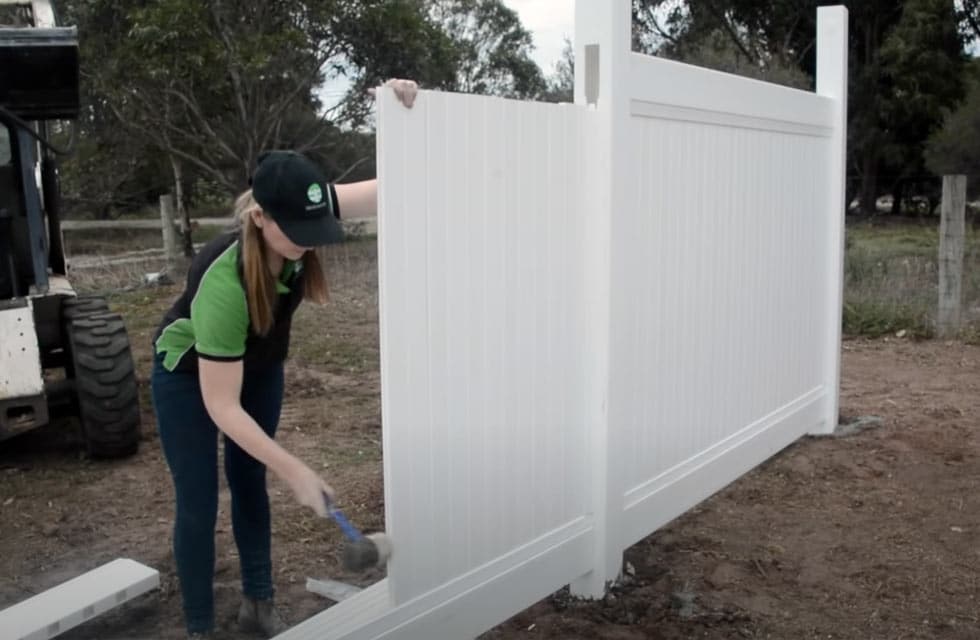
Lending to its simplistic design installation is very fast. All slots in the posts and rails are pre cut allowing for the fence to clip together once the posts have been concreted into the ground.
If any of the fence components are damaged they can be easily replaced. On top of this, if they are vandalised by graffiti it can be easily removed using a warm soapy water solution.
Bellbrae screening
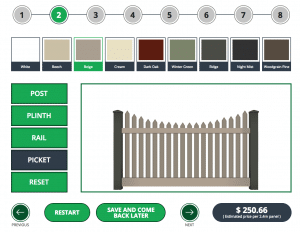
See what your new fence will look like
Choosing a new fence can be a daunting task, as there are so many styles and configurations to choose from. The creative minds at think fencing have made this easier for you. Multiple design options can be selected and adjusted through our fencing visualiser. Once you have settled on a basic design you can upload an image of your house to see how they will look together. www.designmyfence.com.au
Contact Jims fencing for a price.
For design inspiration on your new fence design log onto Think Fencing or contact your local Jims fencing installer on 131 546
What’s the deal with horse fencing any way? Why is it such a big deal?
All animals, including us, have what is referred to as a fight-or-flight response. This is a physiological response to a perceived harmful event or attack, or threat to survival. This response is what makes choosing the right horse fencing so important to the safety of your horse.
FIGHT OR FLIGHT
Horses prefer to flee from danger (Flight), if possible. However, if flight is not an option, horses will fight to protect themselves from a perceived danger. Horses evolved from small mammals whose survival depended on their ability to flee from predators.
This basic survival mechanism is still ingrained in the modern horse. Although we have removed most of the predators from the life of the domestic horse, its first instinct when frightened is to run away from the perceived danger. Consequently when they are enclosed in a paddock and run away from this danger, there is often another real danger lurking at the other end of the paddock. The fence…
We as humans are responsible for the outcome of this evolutionary flight response. With this being said, we can minimise potential harm caused by this response and potentially fatal consequence. We can create a safe environment for our horses. And by safe environment, I am talking of a well maintained paddock with specifically designed horse safe fencing.
The below information discusses the different types of commonly used horse fencing systems worldwide.
Zappa Rail Horse Fencing
OVERVIEW
Combining the strength of wire with the safety and durability of Plastic. Wire reinforced rail commonly known as Zappa Rail has been manufactured by Think Fencing since the early 2000s.
Zappa Rail It is a purpose built horse fencing product used to create a horse safe fencing system. It is made out of two high tensile wires running along the top and bottom edge of the rail.
Encapsulating the wires is a High Density UV stabilised polymer. This polymer not only coats the wires it also runs between the wires creating a sturdy structure. The rail has a very large surface area compared to wire. In the event of an impact the rail will absorb the load along the entire fence run. Resulting in minimal damage to the horse compared to a wire or a solid timber fence.
CREATING THE ZAP!
The rail is generally electrified when installed as horse fencing, this has been made possible by incorporating a highly conductive polymer over moulded on top of the steel wire reinforcement. A standard electric fence energiser is used to run a charge through the top of the rail. Consequently when a horse comes in contact with the fence it gets a shock.
SO EASY TO INSTALL
This style of fencing rail can be adapted to Timber or Plastic Posts, The horse fencing rail is attached to these posts using an insulated bracket. This bracket allows the rail to be tensioned along the fence run with an insul-strainer (as pictured). This system allows the rail to be fully strained and insulated with no specialised tools or equipment. Not only safe, this product looks great and is easy to install. Watch installation video here.
Post and Wire
HOW TO MAKE A WIRE FENCE SAFER
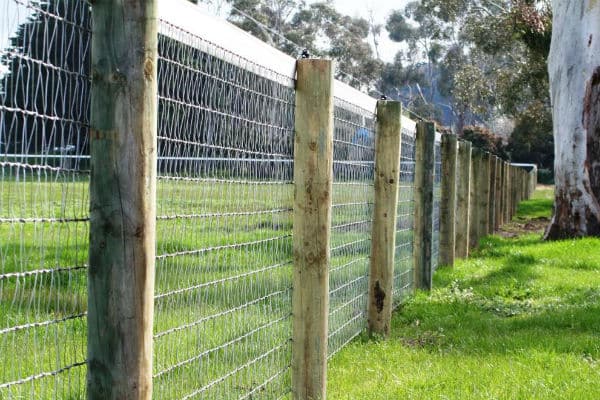
Post and wire is the traditional farm style of fencing you will see all over the world for enclosing all types of livestock. Not really designed as a Horse Fence, this style of fencing is typically made using treated pine or hardwood post of 100-120mm in diameter sitting 1200mm above ground. Depending on the livestock kept behind it it will have up to 12 wires.
The wires can be classified into three categories. Low tensile, Medium tensile and High tensile. The wires range from 2.5 to 3.5mm in thickness.
Posts are commonly spaced from 6 to 12 meters apart. Plastic or timber intermediate droppers are used to separate the wires over the longer spans. Considering this style of fence is not traditionally designed to be used as a horse fence it may be all you have to work with, or your budget will allow. With this being said let’s explore the options available to make this style of fence a safer alternative.
Post and Wire Horse Fencing
SOME WIRE IS STRONGER THAN OTHERS
Low tensile wire will often stretch before it breaks, consequently, when a horse strikes out or collides with a the fence the wire will give way rather than break and act like a cheese slicer on your horse, potentially causing significant injury.
An ideal post spacing is 6m. Any further you will require droppers to hold the wires apart. Your top wire is recommended to be 200mm from the top of the post leaving room for a sighter strip such as Equirail.
MAKE IT EASY TO SEE AND THEREFORE SAFE
Equirail is a cost effective Horse safe Polymer Horse Fence rail that will provide additional safety and visibility when attached to a wire fencing system. The lowest wire should be no less than 500mm from the ground, as a horse rolling may get trapped in the lower wires. A wire horse fence of 1200mm above ground should not require any more than 4 wires and one run of Equirail.
Post and Electric Rope
IT CAN BE MADE TEMPORARY OR PERMANENT
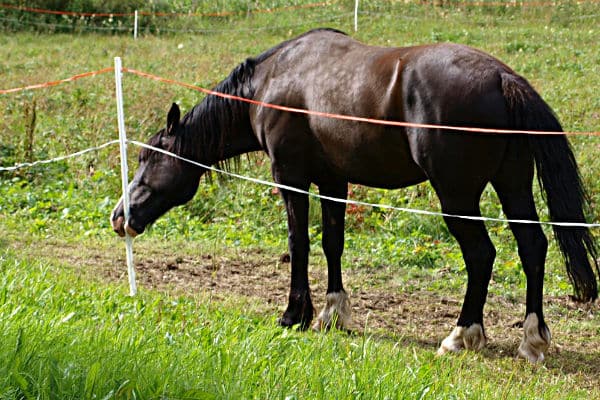
Post and Electric Woven Mesh is a cost effective semi permanent horse fencing solution. For this reason its widely used as a temporary horse fence, coupled with the ability to be electrified its a cost effective alternative.
MAKING IT ZAP
This type of horse fencing is traditionally made of UV stabilised nylon, woven into a strip of 20mm to 50mm flat or 8mm to 12mm round. The centre of the mesh incorporates a copper or stainless steel conductor wire 0.2mm thick allowing the mesh or rope to be electrified by means of an electric fence energiser.
Cheeky horse pulling a post out
ATTACHING TO POSTS
The mesh or rope can be attached to a range of posts using supplied insulated fittings that allow the product to be strained through the insulated section of the fitting and tied off at either end using specific tensioners.
TEMPORARY FENCING
Many companies offer options to fit this type of horse fencing to all types of posts including steel star droppers. For temporary fencing they offer plastic moulded posts up-to 1300mm high with a steel spike at one end and a foot pad so you can push the post into the ground with your feet for temporary horse fencing applications.
PVC Post and Rail
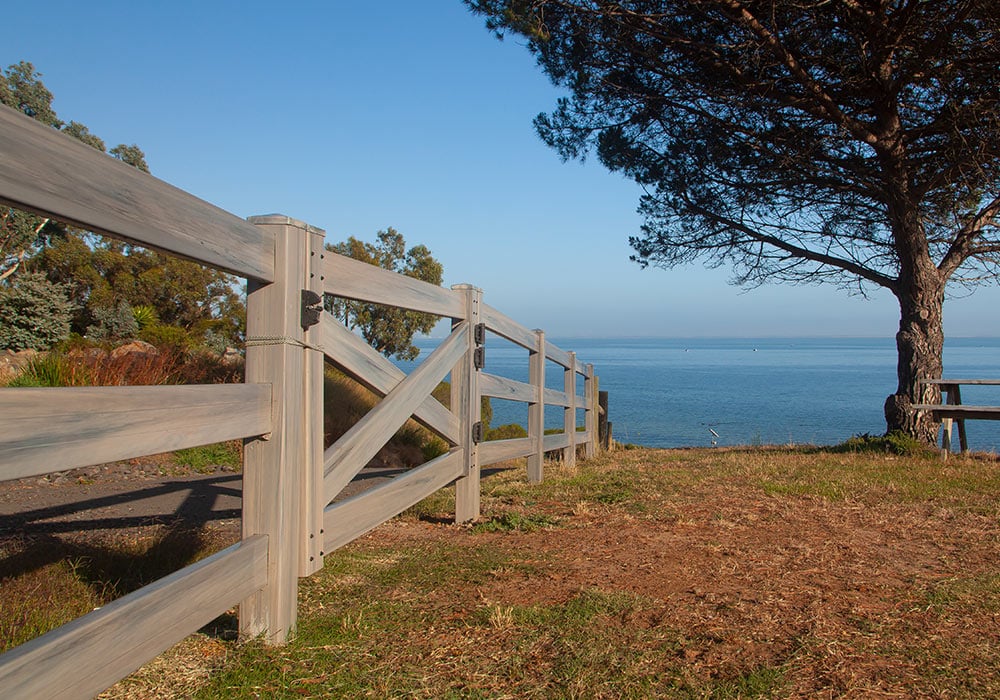
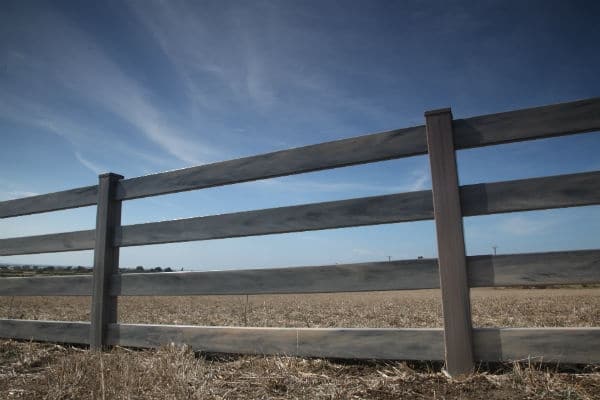
PVC fencing 3 rail Horse Fencing 3 Rail post and rail
LOOKS JUST LIKE A TIMBER FENCE
Combining the traditional elegance of timber post and rail without the maintenance and cost. PVC is the most widely used polymer in construction materials. This is part due to its durability and ability to withstand the outdoor elements, whilst minimising warping and degradation like many other polymers.
Unlike most consumer polymers, PVC is its actually derived from 57% Natural Sea Salt in the form of Chlorine. It does not bioaccumulate in the earth and can be recycled. Many PVC products made in Asia still use a lead stabilised polymer. Where possible when ordering make sure the company has best practice pvc accreditation. Currently Think Fencing is the only company in the world who has this certification.
NOT ALL FENCING WAS CREATED EQUAL
With this being said, not all PVC Horse fences were created equal. PVC has been used as a substitute for timber for over 30 years, the first companies to do this were PVC pipe manufacturers. They used the same material used to make down pipe to make PVC Horse fencing.
The issue here is that this type of PVC was never designed to withstand a horse kicking it or retain its structural integrity for decades. Sadly many companies are still using old technology to manufacture this type of fencing.
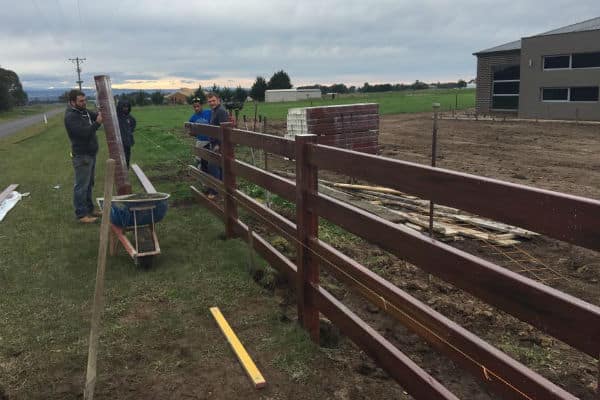
PVC Post and rail being installed
Horse Fencing PVC Woodgrain Pine
THINK SMART
30 Years ago timber was very cheap and PVC was considered an exotic material, therefore more expensive in comparison. Fast forward to 2018 we find ourself in a world wide timber shortage with a large portion of low grade timber ending up as fencing material.
Polymer technology has come a long way, companies such as Think Fencing are developing composites whereby two or more polymers are combined to form an extremely strong, long lasting composite used to create their horse Fencing range.
PUTTING IT TOGETHER
Typically this type of horse fencing is made up of a hollow post of 127x127mm wide with a 5-8mm wall section. The post has slots routed in it to allow rails to slide through the post. This gives the look of a traditional morticed timber fence.
Think Fencing has developed technology to co-extrude a capping layer over the outside of the White PVC, consequently a myriad of colours and textures can be built into the post and rail within a single process. Meaning it will not peel off, and is highly scratch resistant.
I CAN’T BELIEVE IT’S NOT TIMBER
Think fencing has developed technology whereby a wood grain pattern and colour can be combined with the external composite layer to create a totally random finish that mimics timber, its not only beautiful its long lasting, requiring minimal maintenance compared to real timber. It is common for passers by to mistake this type of horse fencing as real timber.
USE AS HORSE FENCING
For use as a horse fencing application this type of fencing provides excellent strength and good looks.
If a horse collides with the fence the rails will give way and release from the slot in the post. Minimising any potential damage to your horse. Electrification can also be added for additional safety.
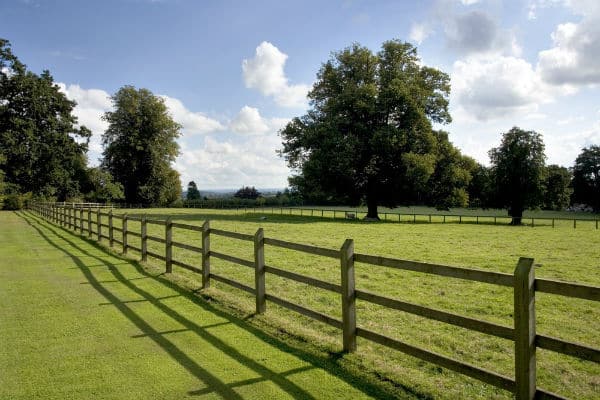
Timber Post and Rail
POSSIBLY THE OLDEST KNOWN HORSE FENCING SYSTEM
Post and Rail fencing made from Timber is the classic rural ranch fence that has been used for centuries. This type of fencing provides excellent containment for your animals and depending on the quality of timber used it can last for Decades.
Timber such as Forest RedGum, Cypress Pine, and Ironbark are commonly used to create a Horse Fence. Whilst it’s a strong and durable fence, It can be one of the most expensive fencing systems.
Horse Fence timber post and rail
KEEPING IT TRADITIONAL
As can be seen in traditional properties around the world, Post and Rail fencing looks good. Generally speaking Timber post and rail fencing set the standard for horse safe fencing.
With Modern technologies and specifically created Horse Fencing systems it is now seen as a product used purely to add aesthetic value to your horse property rather than a horse safe fence. In effect Timber post and rail fencing is not as safe as the other alternatives due to the fact that it offers no flexibility if a horse collides with the fence.
Mesh Fencing
Horse Fencing Mesh
MESHING IT TOGETHER
Mesh fencing has been available for over 20 years in Australia and offers a good safe fencing system. It is made up of wire from 1.5mm upto 5mm that is woven into a mesh pattern. Either Diamonds, Squares or rectangles. The mesh is generally structured in a shape to prevent a horses hoof making its way through the mesh if it decides to collide with the fence.
Available in rolls of up to 50m long or panels upto 3m long, it can be attached to wire that is tensioned up along the top and bottom of a standard fence, or fixed directly to posts and rails.
For the most part this type of fencing is not designed for its aesthetic appeal, rather its designed to be a functional horse safe fence. Whilst not being very visible in certain conditions, many property owners choose to install a polymer rail above the mesh panel fence to increase the visibility.
Safe and simple to use this type of fencing can be used as an add on to PVC post and rail fencing. It can be installed on a wide variety of posts.
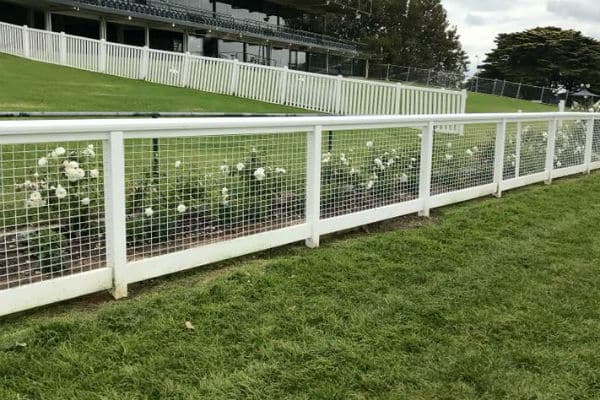
Many racecourses choose to adopt a system consisting of a top and bottom rail of PVC with coloured heavy duty mesh fitted in between the rails. Not only providing safety for horses, it prevents crowds or children from getting through the fence whist providing visibility through the fence. (as pictured)
Horse Fencing using Mesh and PVC post and rail
Equirail Horse Fencing
SIMPLE AND COST EFFECTIVE
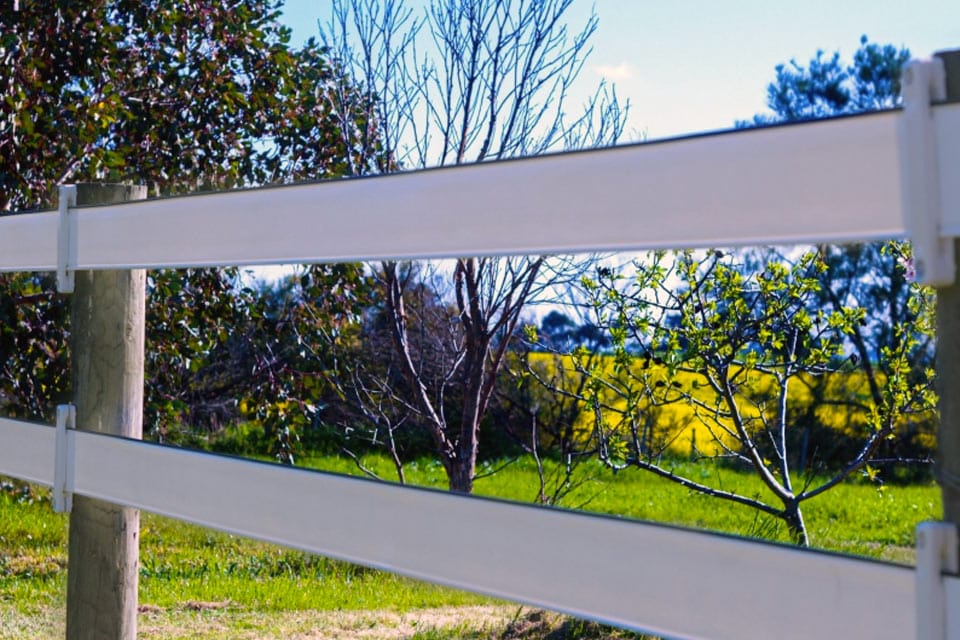
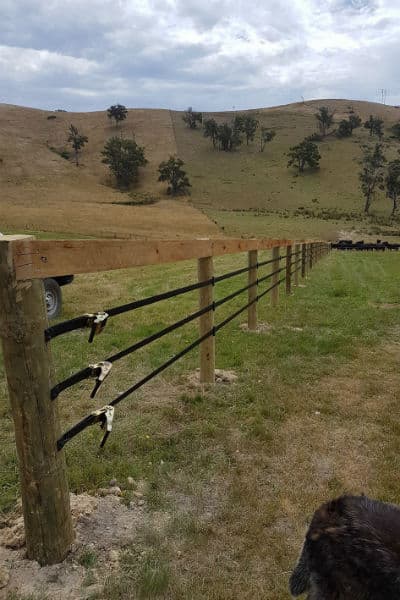
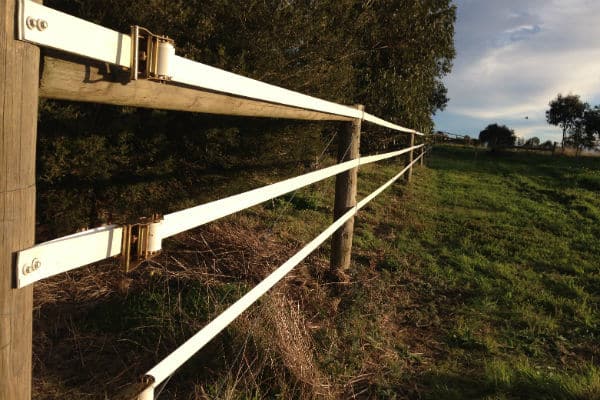
Equirail horse fencing is a newer addition to the range of horse fencing options available today. It is based on the same concept as Zappa Rail or polymer composite tensioned rail. However it does not have any wire built in the rail. It relies solely on the polymer to provide strength.
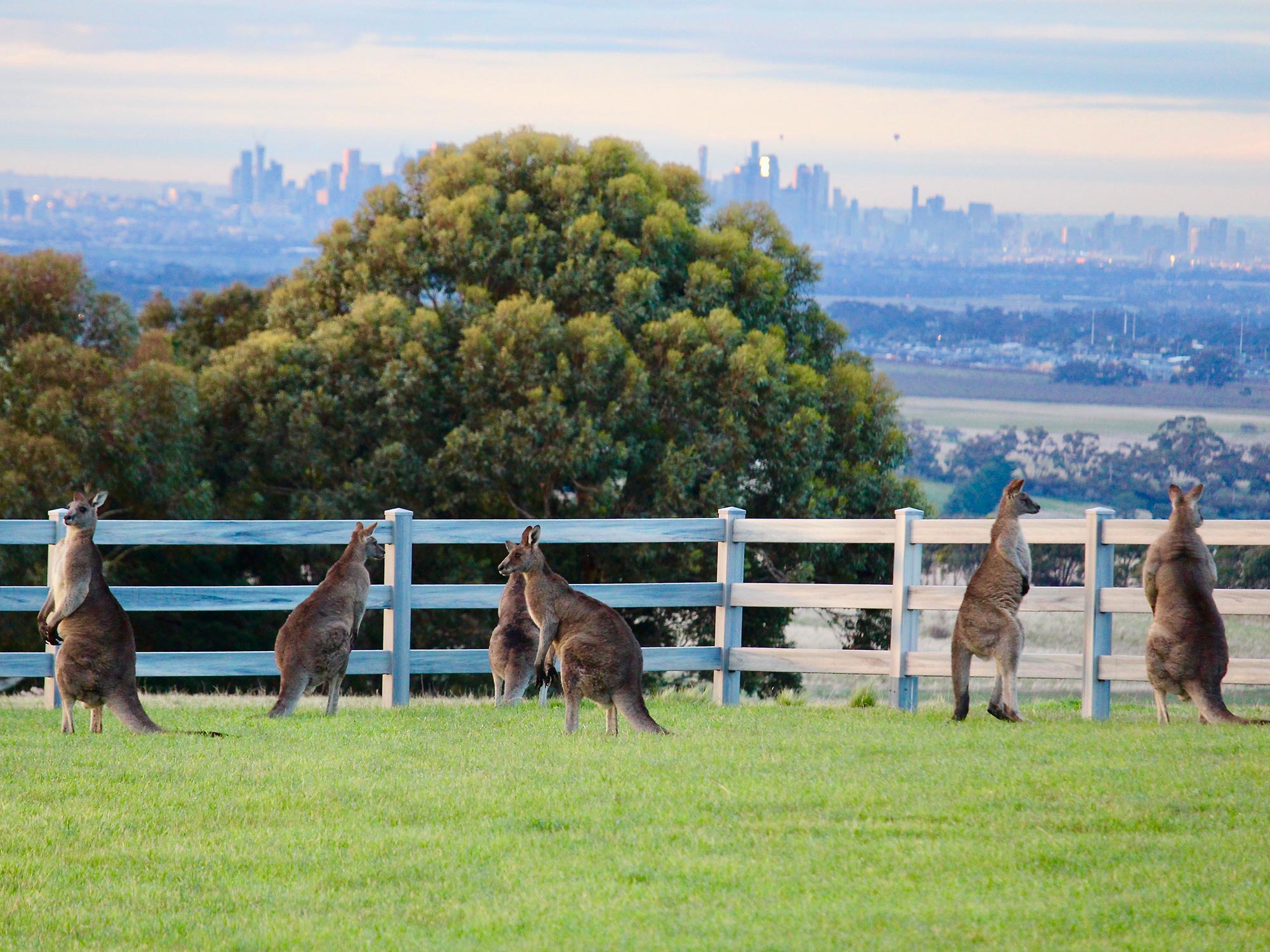
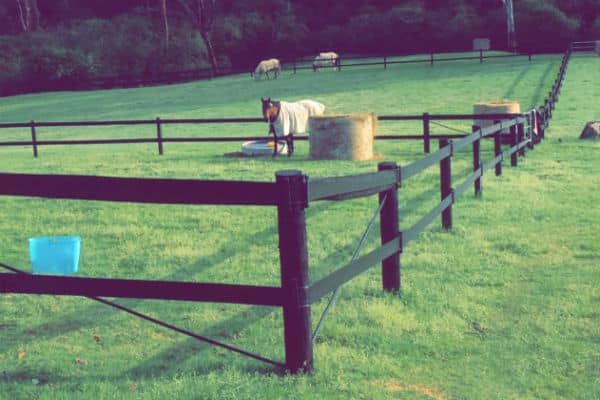
Equirail attached to post and rail
STRONG AND BEAUTIFUL
The Equirail rail is strong enough to withstand a horse colliding with it and not break under a certain strain, with this being said it will minimise the risk of injury in the event of a collision. Equirail is very easy to install and if often used as semi permanent fencing system. It is commonly used to enhance the safety and visibility of wire fencing or as a stand alone fencing system.
Equirail Horse Fencing
TIGHTEN IT UP
Equirail is tensioned using a permanently mounted tensioner, similar to a ratchet load binder. It is cranked up to the desired tension by hand.
Equirail rail runs through brackets that are screwed onto the posts. Commonly available in black or white this horse fencing system is one of the most versatile cost effective systems available.









 Equirail attached to post and rail
 Equirail Horse Fencing