Discover how locally manufactured PVC fencing systems deliver superior durability, compliance, and sustainability compared to overseas alternatives—backed by Australian engineering excellence and climate-specific design.
Engineering Excellence Designed for Australian Conditions
Australia’s climate presents unique challenges that many imported fencing systems simply aren’t engineered to handle.
UV radiation levels are among the highest in the world. Temperature extremes range from coastal humidity to inland aridity. Seasonal weather patterns vary dramatically across the continent.
These conditions place significant stress on outdoor materials.
PVC fencing manufactured overseas is typically engineered for milder European or North American climates. When exposed to Australian conditions, these materials often degrade far more quickly than expected.
Australian-made PVC fencing, by contrast, is specifically formulated for local environmental conditions.
Climate-Specific Material Engineering
Local manufacturers design PVC compounds to withstand the precise environmental stresses that occur in Australia.
These formulations typically incorporate:
- Advanced UV stabilisers calibrated for Australian sun intensity
- Impact modifiers for temperature extremes
- Heat stabiliser packages to prevent chalking and colour shift
- Higher concentrations of titanium dioxide for UV reflection
Wall thickness and structural design are also engineered with Australian wind loading and impact resistance requirements in mind.
This climate-specific engineering addresses degradation mechanisms such as photo-oxidation, thermal cycling, and moisture interaction that occur under prolonged Australian exposure.
Performance Proven Through Testing
Independent testing highlights the difference between locally engineered and imported systems.
Australian-manufactured PVC fencing demonstrates stronger performance across several key measures:
- Colour retention
- Impact resistance
- Dimensional stability
- Long-term weathering performance
These results are based on accelerated weathering tests designed to replicate decades of Australian sun exposure.
Imported alternatives frequently show premature deterioration in the same tests, including brittleness, discolouration, and surface chalking within only a few years of installation.
Quality Assurance and Compliance Standards
Material formulation is only part of the equation. The real difference between Australian and imported fencing often lies in manufacturing oversight and quality assurance.
Australian manufacturers operate under strict regulatory frameworks that govern production processes, workplace safety, and product compliance.
This ensures consistent product quality and reliable batch-to-batch performance.
Manufacturing Oversight
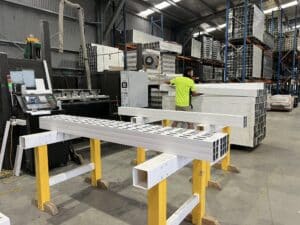
On-shore production allows comprehensive quality control throughout the manufacturing process.
Australian facilities monitor:
- Raw material verification
- Extrusion process consistency
- Finished product inspection
- Batch traceability and documentation
These processes are typically aligned with ISO quality management systems and Australian manufacturing standards.
With imported products, quality control documentation may be incomplete, testing protocols may vary, and consistency between shipments can be unpredictable.
Compliance with Australian Standards
Another critical advantage of Australian-made PVC fencing is verified compliance with local building standards.
Products are commonly tested through NATA-accredited laboratories to ensure compliance with Australian requirements for structural performance, safety, and durability.
These certifications provide genuine assurance that fencing products meet the expectations of:
- Residential installations
- Commercial projects
- Government infrastructure developments
Compliance documentation is particularly important where building regulations or project specifications require certified materials.
Warranty and Consumer Protection
Warranty support is another area where local manufacturing offers clear advantages.
When an Australian manufacturer provides a warranty, the company operates under Australian Consumer Law and remains accessible if issues arise.
Imported products may advertise similar warranty periods. However, enforcement can become difficult when manufacturers operate offshore, importers change suppliers, or distribution companies cease trading.
In those situations, property owners may be left with failed fencing and limited recourse.
Sustainable Manufacturing and Environmental Responsibility
Environmental considerations increasingly influence purchasing decisions.
The sustainability profile of Australian-made PVC fencing extends beyond the product itself to include manufacturing processes, transportation emissions, and waste management.
Reduced Transport Emissions
Imported fencing products typically travel thousands of kilometres by container ship before reaching Australia.
This adds significant transportation emissions to the product’s environmental footprint.
Locally manufactured fencing travels far shorter distances from factory to installation site.
As a result, the embodied carbon in the delivered product can be reduced by up to 70% compared with imported alternatives.
Closed-Loop Recycling Innovation
Australian manufacturers are also investing in advanced recycling technologies.
Think Manufacturing, for example, has developed proprietary recycling processes in collaboration with CSIRO that convert PVC waste streams into valuable feedstock for new fencing products.
This allows recycled PVC to be incorporated into fencing systems while maintaining structural performance and aesthetic quality.
The result is a genuinely circular product lifecycle where materials are reused rather than discarded.
Supporting the Australian Circular Economy
Choosing locally manufactured fencing also supports the broader Australian economy.
Local manufacturing:
- Employs Australian workers
- Supports regional supply chains
- Funds research and development within Australia
- Strengthens advanced manufacturing capabilities
These contributions help build a more resilient and sustainable domestic industry.
Long-Term Durability and Total Cost of Ownership
Imported fencing often appears cheaper at the point of purchase.
However, a total cost of ownership analysis usually tells a very different story once durability, maintenance requirements, and replacement cycles are considered.
Durability Differences
Imported PVC fencing that is not engineered for Australian UV exposure can begin showing degradation within 3–5 years.
Common issues include:
- Colour fading
- Surface chalking
- Brittleness
- Cracking
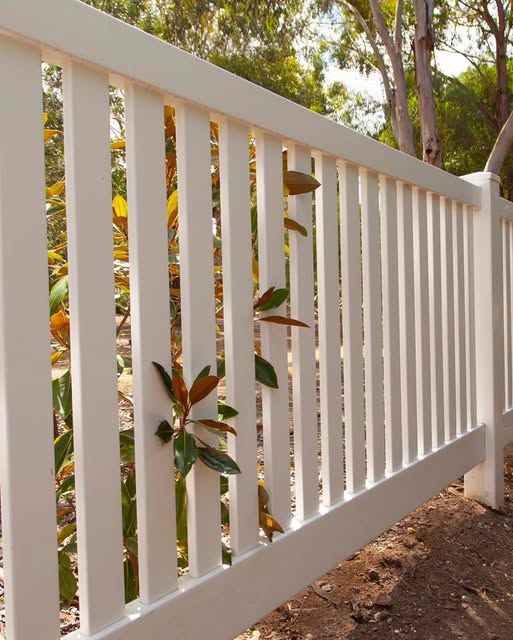
Australian-engineered PVC systems, by comparison, maintain structural integrity and appearance for 25–30 years or more under the same environmental conditions.
Maintenance Requirements
Australian-made PVC fencing requires minimal maintenance. In most cases, occasional washing with water is sufficient to maintain appearance.
There is no need for painting, sealing, or chemical preservation treatments.
Imported fencing that deteriorates more quickly often requires additional maintenance interventions as degradation progresses, including repairs and more frequent cleaning.
Replacement Costs
One of the most significant hidden costs of imported fencing is premature replacement.
If imported fencing requires replacement after 10–15 years, while locally engineered fencing continues performing for 25+ years, the apparent upfront savings quickly disappear.
Additional labour, disposal costs, and project disruption further increase the long-term expense.
When these factors are considered, Australian-made PVC fencing consistently delivers lower lifetime ownership costs.
Supply Chain Reliability and Local Support
Recent global supply disruptions have highlighted the importance of reliable supply chains.
Local manufacturing provides significant advantages in this area.
Faster Lead Times and Reliable Supply
Australian manufacturers maintain inventory within the country and operate production facilities that respond directly to local demand.
This enables:
- Shorter lead times for standard products
- Faster turnaround for custom orders
- More reliable product availability
Import-dependent suppliers often face extended lead times driven by shipping schedules, container availability, and international freight disruptions.
Local Technical Support
Australian-made fencing is supported by local technical expertise.
Manufacturers provide installation guidance, product support, and troubleshooting from professionals who understand Australian construction practices and environmental conditions.
This support network often includes:
- Trained installers
- Product documentation tailored to Australian conditions
- Responsive customer service teams
Such support can be critical when questions arise during installation or maintenance.
Long-Term Product Availability
Local manufacturing also ensures product continuity.
Australian suppliers maintain consistent formulations and product lines, meaning fencing installed today can be matched in the future for repairs, extensions, or staged projects.
Imported product ranges often change between shipments or disappear entirely when suppliers switch factories or manufacturers.
Supporting Australian Manufacturing
Purchasing Australian-made PVC fencing products also contributes to the broader economy.
Local manufacturing supports jobs, strengthens regional industries, and contributes tax revenue that benefits communities across the country.
For government projects, defence installations, and infrastructure developments, Australian-made materials also help meet procurement policies that prioritise local content and supply chain security.
Australian-Made PVC Fencing: The Smarter Long-Term Choice
Australian-made PVC fencing delivers a combination of advantages that imported alternatives struggle to match.
It offers:
- Engineering designed specifically for Australian conditions
- Verified compliance with local standards
- Stronger quality control and warranty support
- Reduced environmental impact
- Greater supply chain reliability
While imported products may appear cheaper initially, the long-term performance, durability, and support offered by Australian manufacturing consistently deliver greater value.
For property owners, contractors, and commercial developers seeking durable fencing solutions built to withstand Australian conditions, locally manufactured PVC fencing represents the smarter long-term investment.